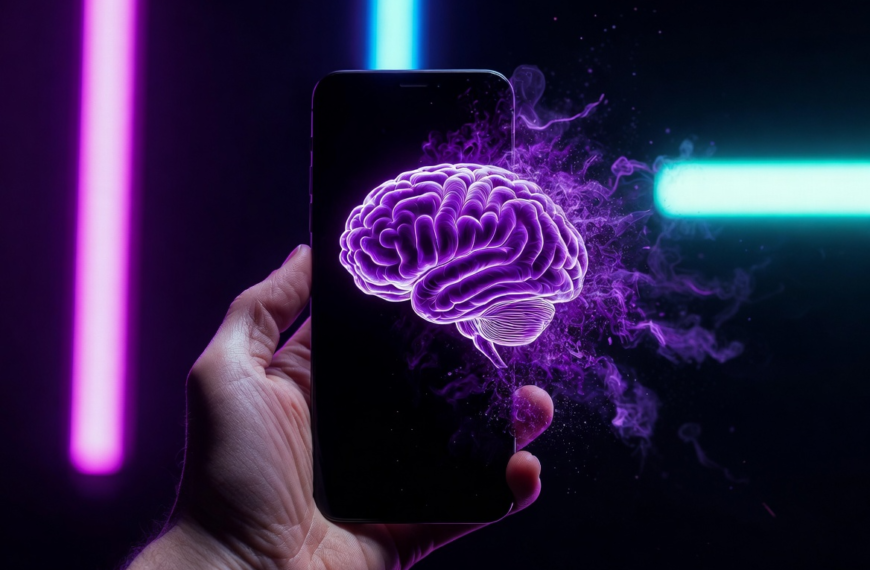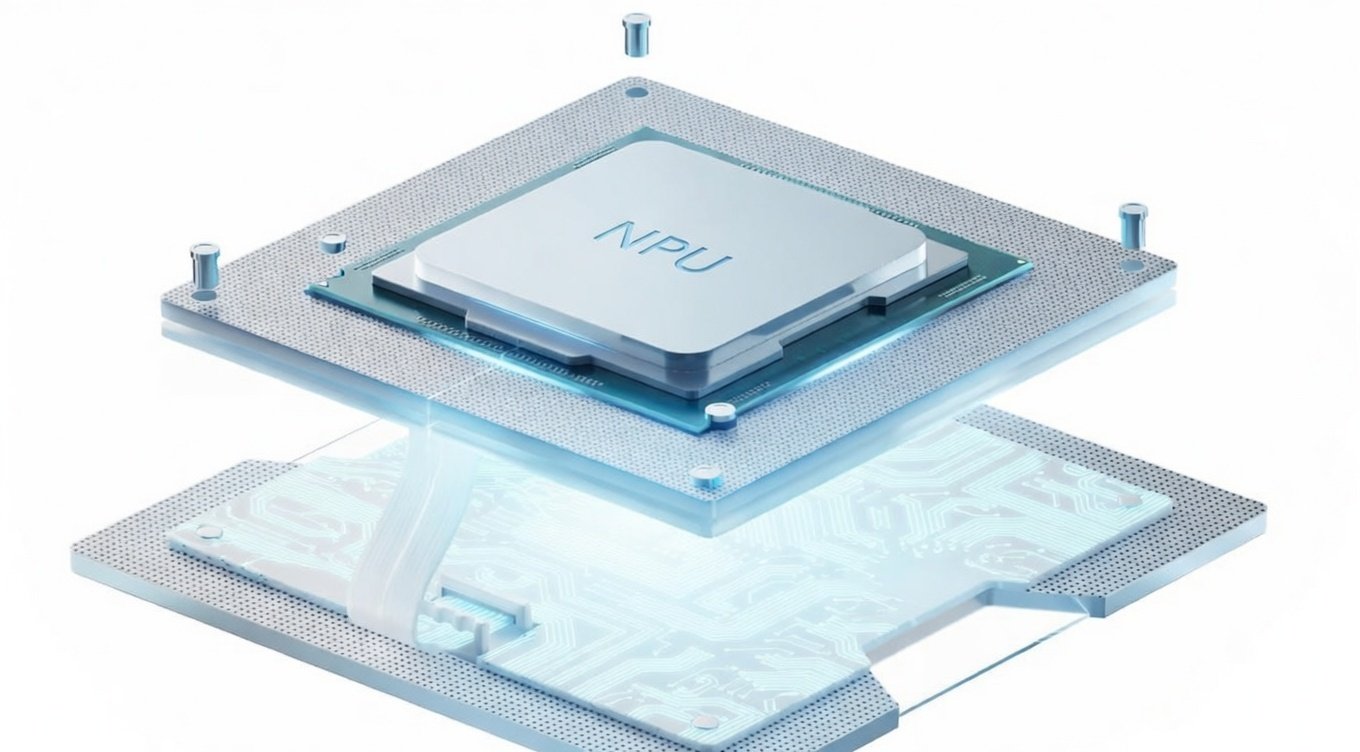
A significant portion of AI now runs directly on your device — no cloud, no waiting. Behind that shift is a quiet but meaningful change in how hardware is built.
Think about real-time voice transcription, background blur on a video call, or instant photo enhancement. These feel ordinary now. A few years ago, most of them required a remote server. What changed is that your device grew a new kind of brain — one built specifically for AI.
GPUs were never really built for this
For years, AI ran on GPUs. They were fast, flexible, and powerful — but also energy-hungry, even for small tasks. Running a GPU continuously for something like live captions is inefficient by design. That is the problem Neural Processing Units (NPUs) were created to solve.
An NPU is not trying to replace the GPU. It handles a specific category of work — continuous, lightweight AI tasks — far more efficiently than a GPU ever could. Less heat, less power, less battery drain.
Each chip has its lane
NPU — endurance
Continuous, lightweight AI
1. Live captions & translation
2. Noise suppression on calls
3. Camera & background effects
4. Voice assistants
GPU — intensity
Gaming & model training
1. 3D rendering
2. Video editing & upscaling
3. Image & video generation
4. Heavy, high-performance tasks
Modern devices use both — routing work to whichever chip handles it best. The result registers simply as “this feels faster.” Underneath that is a hardware architecture that has grown more specialized and therefore more efficient.
The chip launches that made this mainstream
Apple Silicon (M1 onwards)
Apple’s Neural Engine brought on-device AI to MacBooks years before the rest of the industry. Every M-series chip since has built on that foundation.
Intel Core Ultra Series 1 — Meteor Lake
Intel’s first consumer processor with a dedicated NPU (Intel AI Boost). Launched in laptops from Asus, Lenovo, Acer, and MSI. The start of Intel’s “AI PC” era.
AMD Ryzen AI & Qualcomm Snapdragon X
AMD’s Ryzen AI chips pushed NPU performance to 50 TOPS — the highest in Windows laptops at the time. Qualcomm’s Snapdragon X Elite arrived with 45+ TOPS and exceptional battery life on ARM.
Intel Core Ultra Series 2 — Lunar Lake & Arrow Lake
Lunar Lake hit 48 dedicated NPU TOPS, qualifying for Microsoft’s Copilot+ certification. Arrow Lake brought NPUs to Intel’s desktop platform for the first time.
Intel Panther Lake, AMD Gorgon Point & Apple M5
The current generation. NPUs are now standard across virtually every premium laptop. The baseline keeps rising.
What to buy — and where to find it
Look for at least 40 TOPS on the NPU spec. Intel Core Ultra offers the broadest software compatibility, AMD Ryzen AI delivers the highest TOPS per dollar, Snapdragon X wins on battery life, and Apple Silicon leads on Mac integration. Here are six solid options across different needs and budgets:
Best valueAcer Aspire 14 AI
Intel Core Ultra 5 · 40 TOPS · ~$499
The most affordable path to a genuine Copilot+ experience. Covers all everyday AI features without premium pricing.
Creatives
Asus Zenbook S16
AMD Ryzen AI 9 HX 370 · 50 TOPS · from $1,069
Highest NPU TOPS in mainstream Windows laptops. Strong performance, solid Radeon graphics, and a full work-day battery.
Everyday use
Microsoft Surface Laptop
Snapdragon X · 45+ TOPS
Outstanding battery life and clean Copilot+ integration. Ideal for portability-focused professionals
Creatives
Asus Zenbook 14 OLED
Intel Core Ultra · AI Boost NPU
3K OLED display, 100% DCI-P3,
and strong sustained performance in Photoshop and After Effects. Well-rounded for creative work.
Everyday use
Apple MacBook Air M4
Apple M4 · 38 TOPS Neural Engine
Silent, slim, 15+ hours of battery, and deeply integrated AI features. The benchmark for effortless everyday use.
Power users
Asus ROG Flow Z13
AMD Ryzen AI Max+ 395 50+ TOPS
from $2,069
A portable 2-in-1 that can run large local AI models. Bridges everyday portability with serious AI and gaming capability.
you can find them on amazon with the link provided on each product name on the list
The bottom line
AI is no longer a feature bolted onto software — it is becoming part of the foundation of how devices work. The friction of cloud dependency is fading. Commands respond instantly, edits happen locally, tools work offline. Most users will not know why their device feels smarter. Behind it all, NPUs and GPUs are simply dividing responsibilities — and doing it better with every generation.