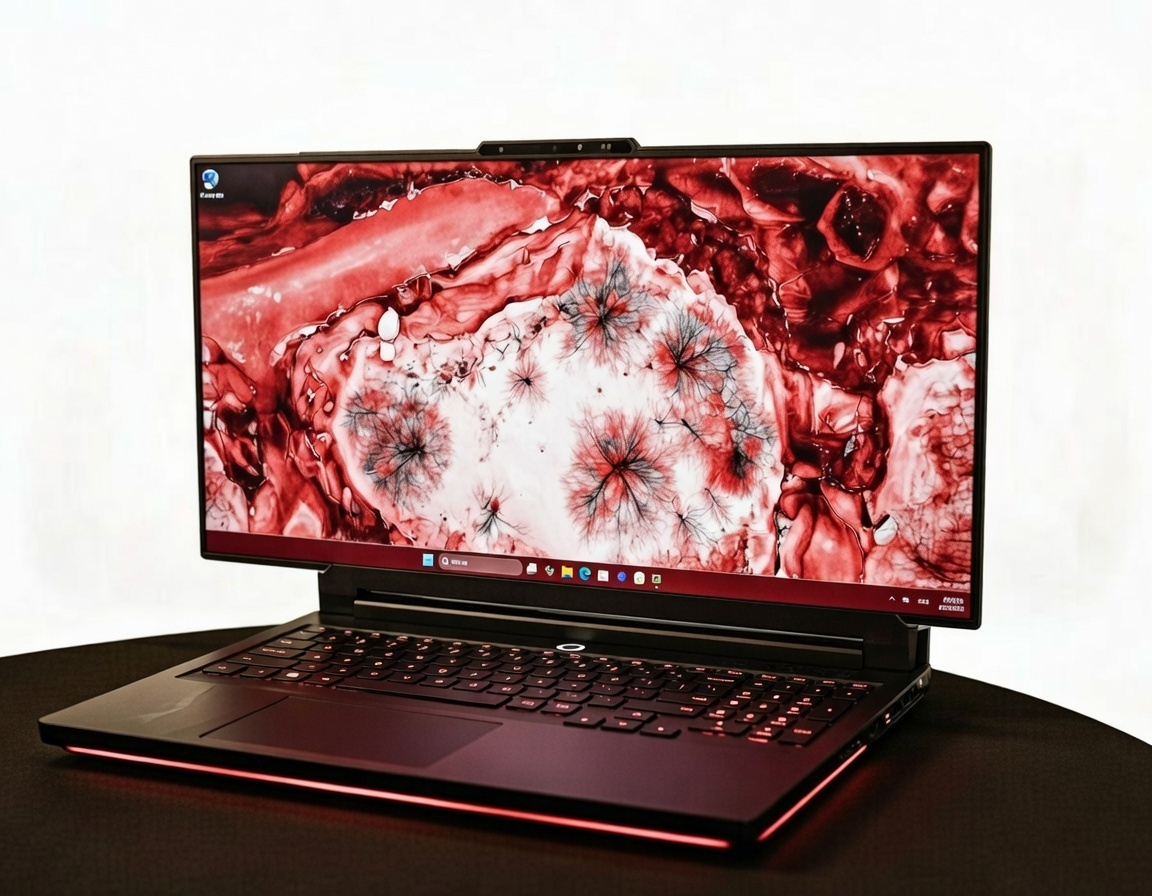
CES 2026 unfolded in Las Vegas, one of the most exciting and forward-looking trends in gaming hardware wasn’t just faster processors or brighter screens — it was the emergence of truly flexible and upgradeable gaming laptops. For years, gamers have had to accept a difficult compromise: choose between powerful performance or true portability.
This year, several manufacturers showcased concepts that aim to break that trade-off, introducing rollable displays and modular components that could fundamentally change how we think about high-end portable gaming systems. Instead of forcing users to choose one priority over the other, these new approaches suggest a future where adaptability becomes a core feature rather than an afterthought.
While many of these designs are still in the concept stage, the message from the show floor was clear: the next generation of gaming laptops is moving toward greater flexibility, longer lifespans, and better sustainability. Industry observers noted that this shift reflects a broader change in consumer expectations, where buyers increasingly demand devices that can evolve alongside their needs rather than becoming obsolete within a few years.
Lenovo’s Impressive Legion Pro Rollable Concept
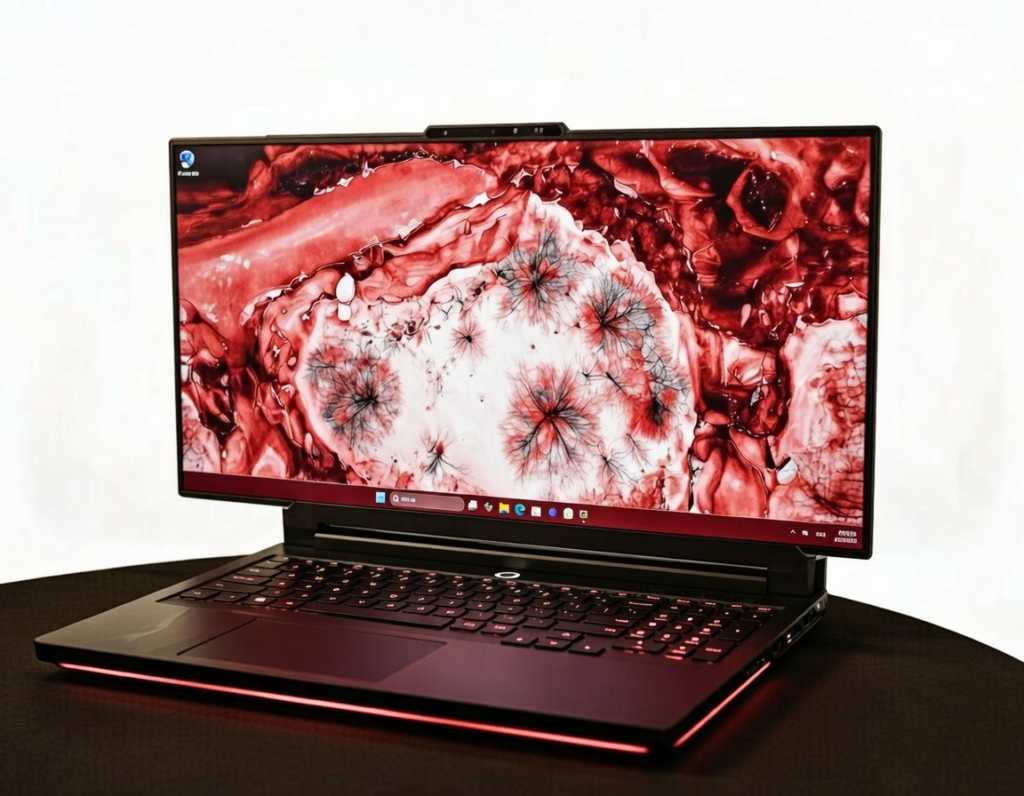
One of the standout prototypes came from Lenovo. The company unveiled the Legion Pro Rollable, a bold gaming laptop concept featuring a motorized rollable OLED display.
In its compact form, the device offers a standard 16-inch screen. With the push of a button (or via software control), dual internal motors extend the display horizontally, transforming it into a spacious 21.5-inch or even 24-inch ultrawide panel. This transformation happens smoothly and quickly, highlighting the level of engineering refinement that has already been achieved in flexible display technology.
This expandable screen is designed to give gamers the best of both worlds: a highly portable machine for everyday use and a wide, immersive display perfect for gaming, multitasking, or content creation when needed. For competitive gamers, the ultrawide format offers a broader field of view, while creators benefit from the extra screen real estate for timelines, editing tools, and multitasking workflows.
Lenovo equipped the prototype with its advanced PureSight OLED technology, promising high refresh rates, excellent contrast, and vibrant colors. These display improvements are not just cosmetic — they directly enhance gameplay responsiveness and visual clarity, two factors that remain critical for high-end gaming experiences.
Under the hood, the concept is powered by Intel’s latest Core Ultra processors and NVIDIA’s powerful GeForce RTX 5090 laptop GPU, making it a true high-performance machine. This combination ensures that the device is not merely a design experiment but a serious contender in terms of raw computing power.
While Lenovo has not yet confirmed a production timeline, the company’s successful commercialization of a rollable ThinkBook in previous years suggests we could see a consumer version of the Legion Pro Rollable as early as late 2026 or 2027. If brought to market at scale, it could set a new benchmark for premium gaming laptops.
The Rise of Modular Gaming Laptops
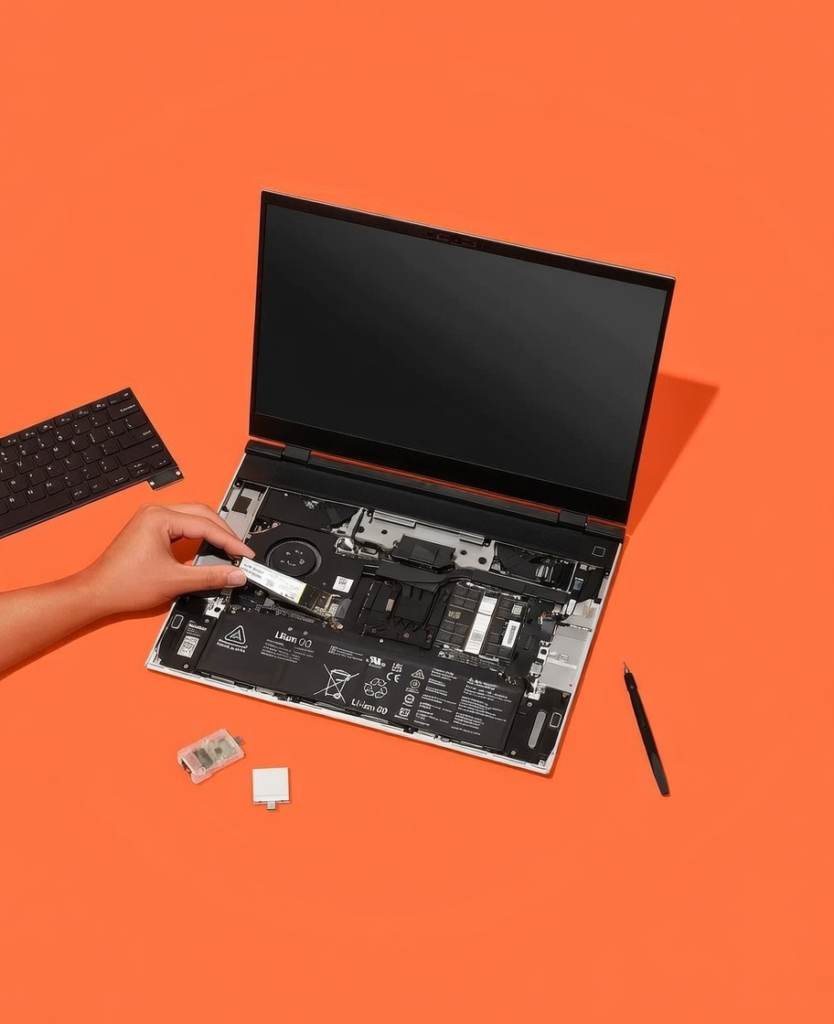
Rollable displays weren’t the only innovation stealing attention. Modular and semi-modular designs also gained significant momentum at CES 2026.
Companies including HP, Dell, and Lenovo demonstrated laptops that allow users to easily upgrade or replace key components such as RAM, storage, cooling systems, ports, and even keyboards. This approach directly addresses one of the most common frustrations among gamers: the inability to upgrade critical hardware without replacing the entire system.
This trend builds directly on the success of Framework, whose fully modular Laptop 16 has already proven that repairability and upgradability can appeal to tech enthusiasts. Framework’s approach has shown that there is real demand for devices designed with longevity in mind, rather than planned obsolescence.
While most gaming-focused concepts shown at CES stopped short of full modularity to maintain performance and structural integrity, even partial upgradability represents a meaningful step forward. Engineers must balance flexibility with thermal performance, power delivery, and physical durability, making full modularity in high-performance gaming laptops a complex challenge.
For gamers, this could be game-changing. Instead of spending over $3,000 on a flagship laptop only to feel it’s outdated in two years, users could potentially upgrade the GPU, add more RAM, or improve cooling — all without buying an entirely new system. This shift could significantly reduce long-term ownership costs while also improving user satisfaction.
Why This Matters: Cost, Sustainability, and Real Consumer Needs
Several important factors are driving these innovations, and they go beyond simple technological curiosity.
First, gaming laptops have become extremely expensive, with many premium models now exceeding $3,000. As prices rise, consumers are becoming more cautious about their purchases and are actively seeking products that offer longer usable lifespans.
Second, global regulations around right-to-repair and electronic waste are becoming stricter. Governments and advocacy groups are pushing manufacturers to design products that are easier to repair and upgrade rather than simply replace. This regulatory pressure is beginning to influence product design decisions at the highest levels.
Third, environmental concerns are playing an increasingly important role. Electronic waste is a growing global issue, and extending the life of devices is one of the most effective ways to reduce its impact. Modular and upgradeable laptops align closely with these sustainability goals.
Finally, flexible display technology has matured rapidly. What was once limited to experimental prototypes is now approaching commercial viability thanks to improved manufacturing processes, stronger materials, and declining costs.
Industry analysts at the show noted that while rollable and fully modular gaming laptops are unlikely to dominate the market immediately, CES 2026 clearly showed these technologies moving out of the “gimmick” phase and into serious development.
What to Expect in the Coming Years
Over the next 12 to 24 months, expect manufacturers to refine these concepts significantly and begin testing early commercial releases.
Key challenges remain, particularly around durability of moving parts, heat management in expandable designs, and keeping costs reasonable. Long-term reliability will be especially important, as consumers are unlikely to adopt these innovations if they introduce new points of failure.
At the same time, improvements in materials science, cooling technologies, and compact component design are expected to address many of these concerns. Companies are investing heavily in research to ensure that flexibility does not come at the cost of performance or reliability.
If these hurdles are successfully addressed, rollable displays and modular components could redefine what we expect from premium gaming laptops. Instead of being locked into a fixed configuration, users may gain the ability to adapt their devices over time, extending usability and improving value.
Rather than disposable high-performance machines, future gaming laptops may become long-term investments that evolve alongside the user’s needs, much like desktop PCs have traditionally done.