
- How Multi-Agent Workflows Operate
- Figure 1: Multi-Agent Orchestration Architecture
- Visualizing Multi-Agent Architectures
- Figure 2: MCP vs A2A Protocols
- Transforming Key Industries
- Figure 3: Agentic AI in Supply Chain – Multi-Agent Workflow
- The Road Ahead: Trust and Governance
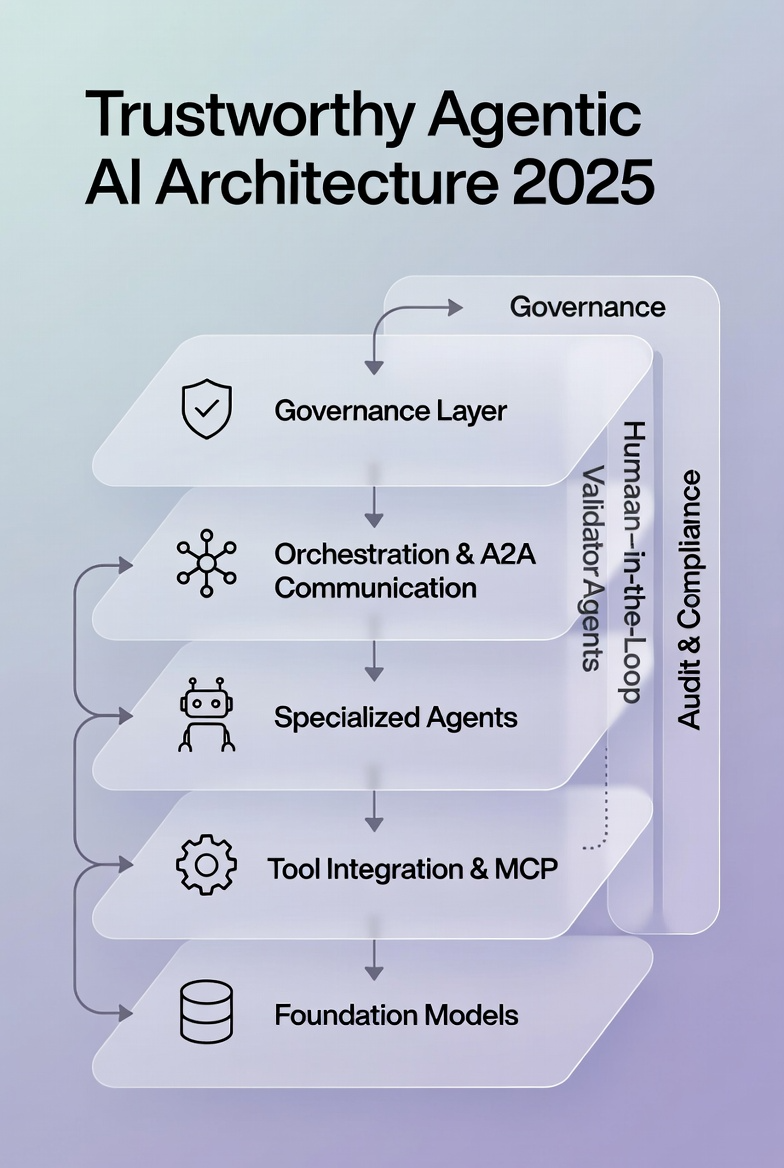
- Figure 4: Trustworthy Agentic AI Architecture
- more on ai
In January 2026, artificial intelligence has entered a truly transformative phase. Agentic AI is no longer just hype or experimental technology — it is now delivering measurable, real-world results across many industries. These advanced systems go well beyond traditional chatbots or simple generative tools. They can autonomously plan, reason through complex problems, use external tools and data sources, and successfully complete multi-step tasks with very little human involvement.
Unlike older AI models that only react to a single prompt, agentic systems work with clear goals in mind. They decide what needs to be done, choose the best way to do it, break down tasks into steps, and adapt their plans when conditions change. This ability to act independently and intelligently represents a major leap forward in AI capability.
How Multi-Agent Workflows Operate
The biggest breakthrough in agentic AI comes from multi-agent workflows. Instead of relying on one single AI, these systems use multiple specialized agents that work together like a well-coordinated digital team. Each agent has its own specific role and responsibility, allowing the group to handle complicated operations much more efficiently and reliably.
For example, in a supply chain setting:
- One agent might constantly monitor inventory levels and demand signals
- Another might negotiate with suppliers or evaluate pricing
- A third focuses on optimizing delivery routes and adjusting schedules in real time
These agents constantly communicate, share up-to-date information, and adjust their actions automatically as new data comes in — often without needing constant human supervision.
This team-based approach makes agentic AI especially valuable for industries such as manufacturing, logistics, finance, operations, and large-scale enterprise automation.
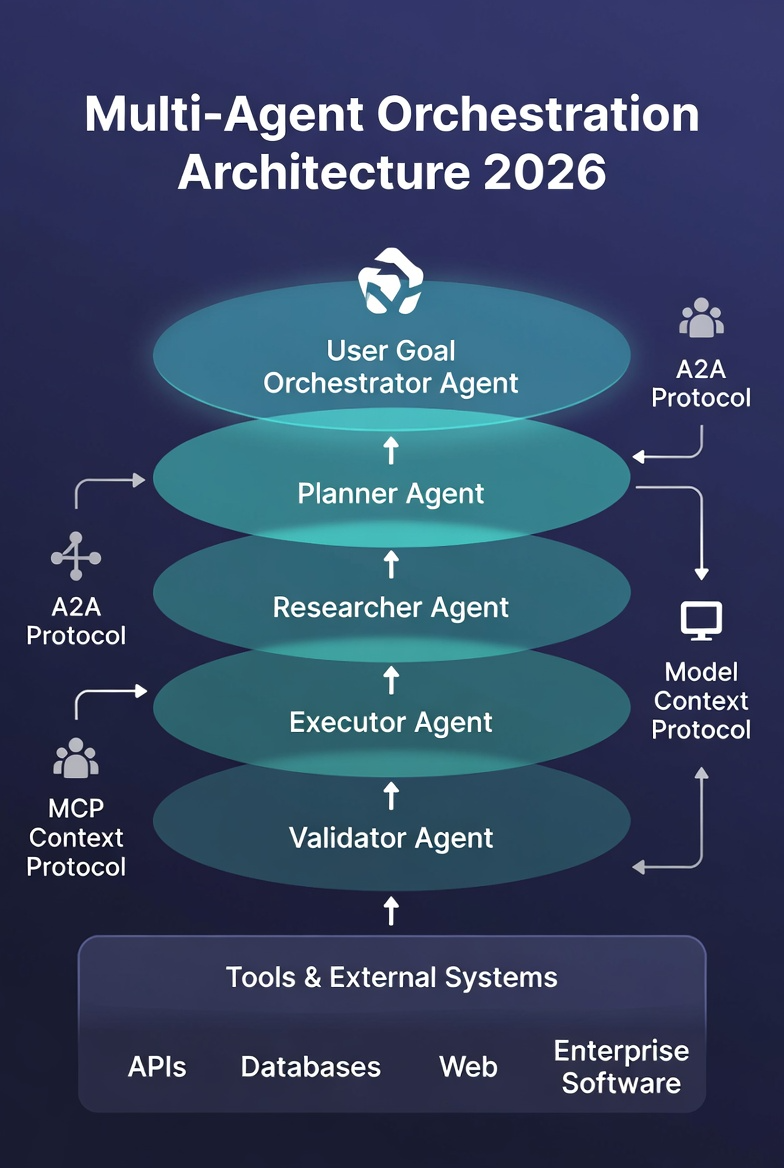
Figure 1: Multi-Agent Orchestration Architecture
This diagram provides a clear overview of how agentic AI systems are structured. At the top sits the Orchestrator Agent, which understands the main goal. Below it are specialized agents including the Planner, Researcher, Executor, and Validator. The diagram shows how these agents communicate with each other using the A2A protocol and how they connect to external tools and systems using the MCP protocol. It helps readers easily visualize the layered teamwork behind agentic AI.
Visualizing Multi-Agent Architectures
Because multi-agent systems can be complex, good visual diagrams are essential for understanding how everything connects and works together.
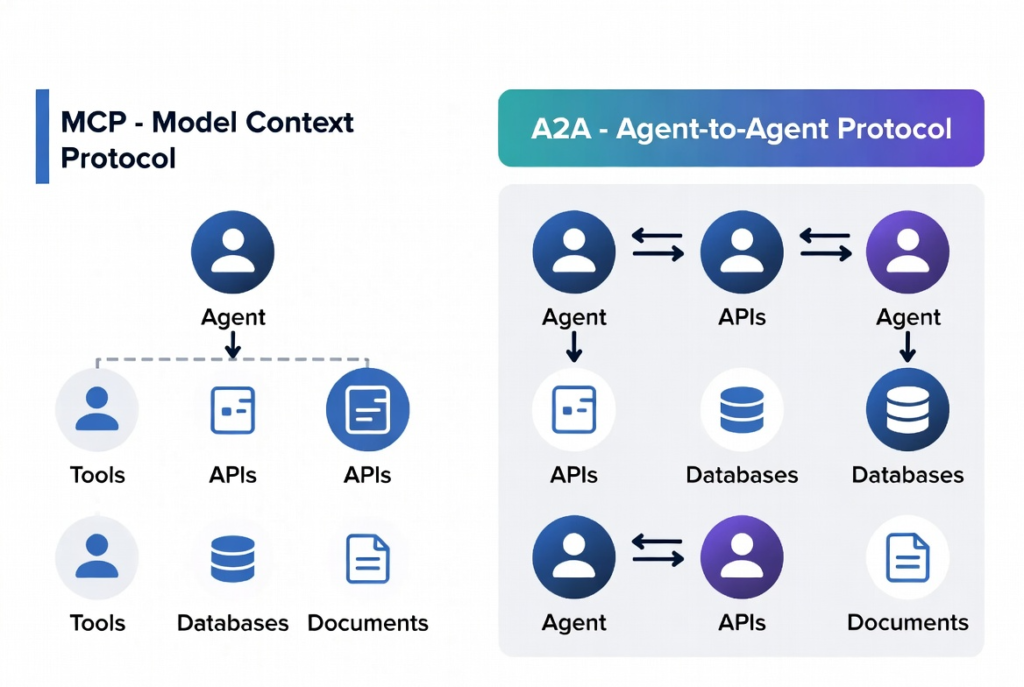
Figure 2: MCP vs A2A Protocols
This simple side-by-side comparison explains the two key communication protocols used in agentic AI. On the left, the MCP (Model Context Protocol) shows how an agent connects downward to tools, APIs, databases, and documents. On the right, the A2A (Agent-to-Agent Protocol) illustrates how multiple agents talk directly to one another using bidirectional arrows. This visual makes it easy for anyone to understand the difference between an agent accessing tools versus agents collaborating with each other.
Transforming Key Industries
Logistics & Supply Chain
The impact of agentic AI is especially impressive in logistics and supply chain operations. Here, multiple specialized agents coordinate entire end-to-end workflows in real time. They forecast demand more accurately, reroute shipments when delays occur, find alternative suppliers during shortages, and automatically update delivery times across different platforms.
Early adopters have already reported up to 40% fewer delays, substantial cost savings, and much greater reliability — even when facing unpredictable events like weather disruptions or supply shortages.
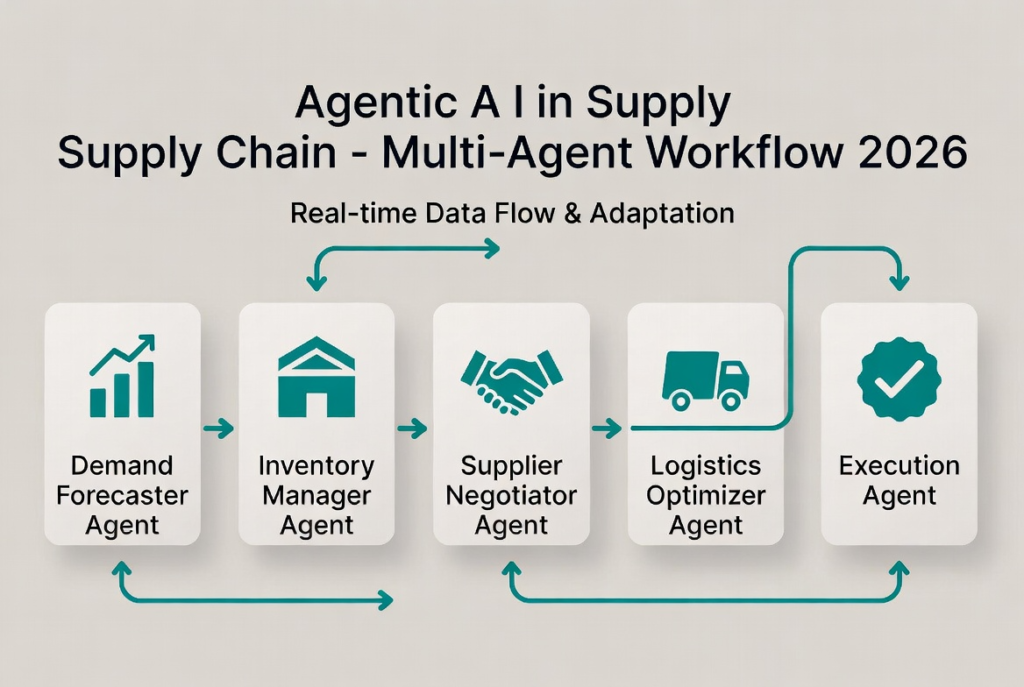
Figure 3: Agentic AI in Supply Chain – Multi-Agent Workflow
This flowchart gives a practical view of how agentic AI operates in a live supply chain. It shows five key agents working in sequence:
- Demand Forecaster Agent
- Inventory Manager Agent
- Supplier Negotiator Agent
- Logistics Optimizer Agent
- Execution Agent
The arrows highlight real-time data flow and adaptation loops, making it easy to see how the system responds intelligently to changing conditions.
Manufacturing
In manufacturing, agentic systems continuously monitor equipment health to predict failures before they happen, carry out real-time quality checks, automatically reorder materials, and adjust production schedules when problems arise. The result is less downtime, higher efficiency, and better product quality.
The Road Ahead: Trust and Governance
As agentic AI becomes more powerful and widely used, the main focus in 2026 has shifted from raw capability to trustworthy autonomy. Leading companies are now implementing “bounded autonomy” models, where agents can operate freely but only within clearly defined limits and rules.
New governance agents are also being introduced to monitor, audit, and guide other agents. For critical decisions, human oversight remains an important safeguard.
Figure 4: Trustworthy Agentic AI Architecture
This layered diagram presents the complete structure of a reliable agentic AI system. It starts with Foundation Models at the base and builds upward through:
- Tool Integration
- Specialized Agents
- Orchestration & Communication
- Governance Layer
The Governance Layer includes validator agents, human-in-the-loop controls, and compliance checks. This visual helps readers understand how safety, accountability, and control are intentionally built into modern agentic systems.
Ultimately, agentic AI is not about replacing humans — it is about augmenting them. By taking care of complex coordination and routine execution, these systems give people more time to focus on strategy, creativity, innovation, and important decision-making.
With open protocols like MCP and A2A making collaboration easier, 2026 is shaping up to be the year agentic AI moves from pilot projects into mainstream enterprise use, bringing significant productivity gains and reshaping how work gets done.