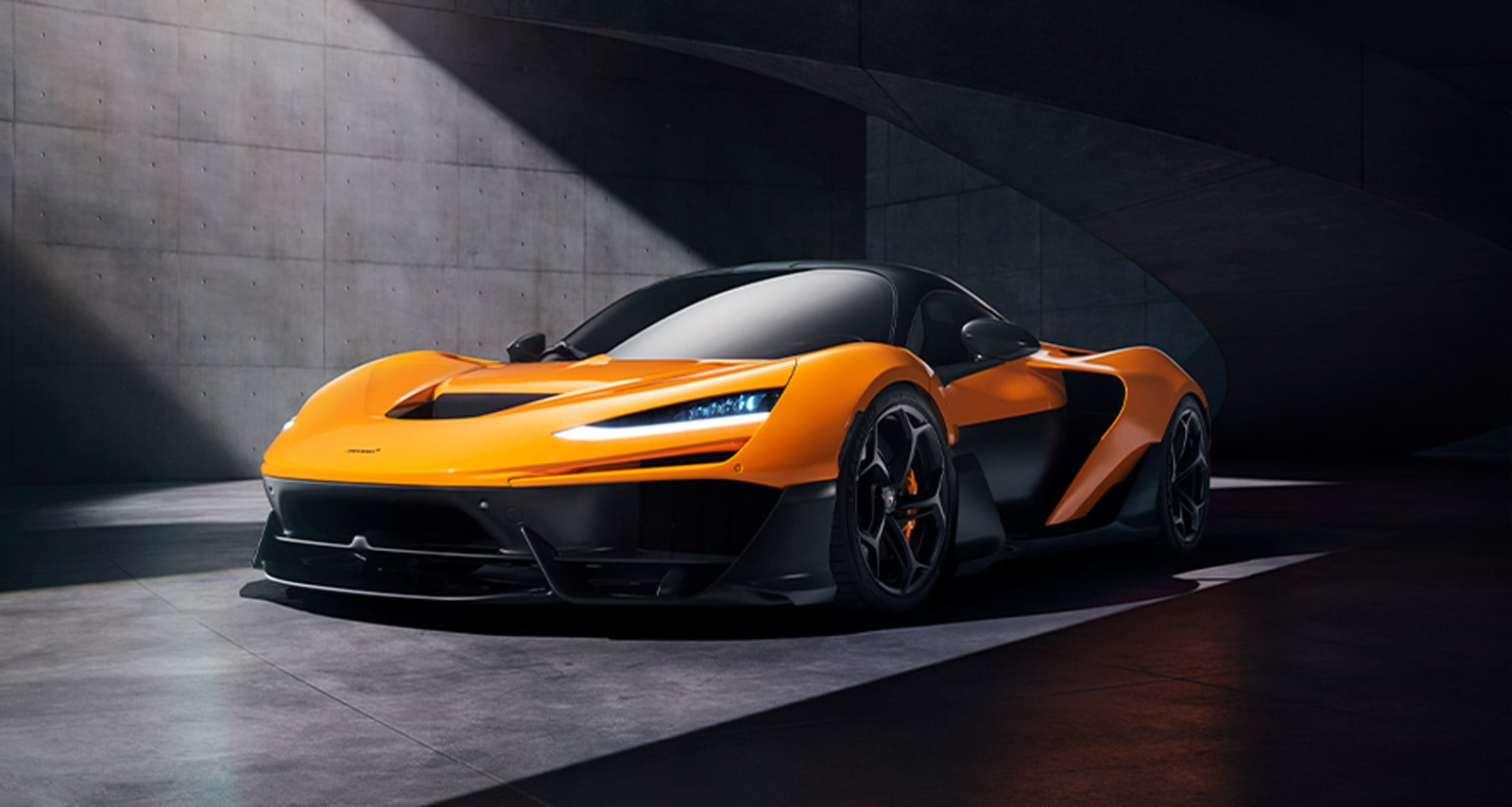
PRICE
$2.1M
POWER
1,258 hp
0-60
2.7s
STATUS
Sold Out
On October 6, 2024, on the fiftieth anniversary of McLaren’s first Formula 1 World Championship, the brand pulled the cover off a car it had spent a decade building toward. It called the car W1. Two years on, that number needs no further explanation. Every one of the 399 examples McLaren planned to build has already found a buyer, and the reviews now arriving from people who’ve actually driven it suggest the car earned that demand before a single unit reached a driveway.
Production Data
McLaren W1
$2.1M
Starting Price
1,258 hp
Combined Output
988 lb-ft
Torque
2.7 sec
0–60 mph
217 mph
Top Speed
3,084 lbs
Dry Weight
2,200+ lbs
Downforce
399/399
Sold Out
A Direct Descendant, Not a Reinvention
The W1 doesn’t try to reinvent what a McLaren flagship is. It extends a lineage that runs through the P1 and, before that, the original F1, the car that effectively defined the modern hypercar category in the early 1990s. That lineage is the entire point. McLaren has only ever built two other cars carrying this level of significance, and both are now regarded among the most important road cars ever made. The W1 was designed from day one to be spoken about in the same breath.
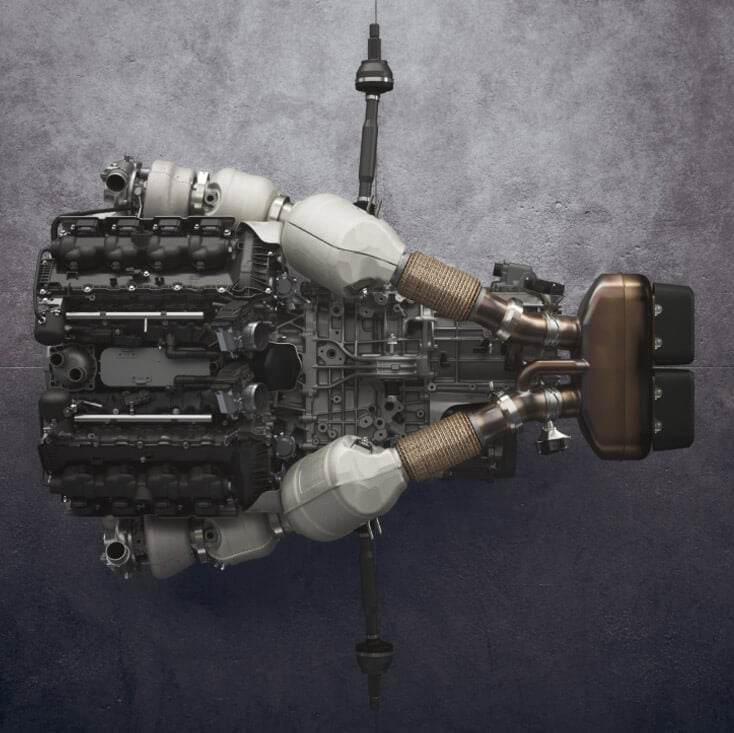
At the heart of that ambition sits the MHP-8, a new 4.0 litre twin-turbocharged V8 with a flat-plane crank that revs to 9,200 rpm and produces 915 horsepower entirely on its own, the most powerful engine McLaren has ever fitted to a road car. A radial flux electric motor adds the rest, bringing the combined total to 1,258 horsepower and 988 pound-feet of torque, sent entirely to the rear wheels through an eight-speed dual-clutch transmission. There’s no all-wheel-drive system helping put that power down. McLaren wanted the W1 to feel like a McLaren, not a computer quietly distributing torque on its behalf.
The Numbers, and the Aerodynamics Behind Them
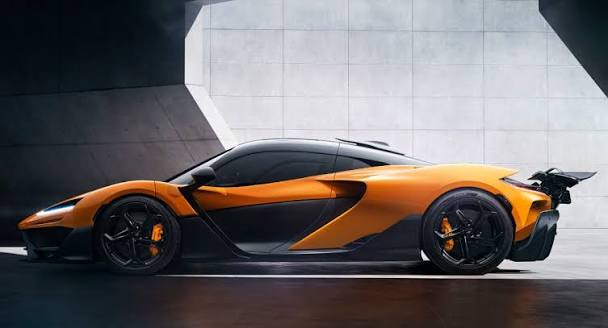
The resulting performance figures read the way you’d expect at this level: 0 to 60 mph in 2.7 seconds, a quarter mile in 9.6 seconds, and a top speed of 217 mph, all from a chassis with a dry weight of just 3,084 pounds. What makes those figures repeatable, corner after corner, is the aerodynamic package built around them. The Active Long Tail rear wing extends backward by roughly a foot under hard cornering and braking, working alongside an active front splitter and a ground-effect floor conceptually derived from the MCL38 Formula 1 car to generate more than 2,200 pounds of downforce. The new Anhedral doors, which integrate aero blades directly into their structure, are as functional as they are dramatic to watch open.
“The best all-round hypercar we’ve yet seen.”
Hagerty, 2026 McLaren W1 Review
Choosing Feel Over Full Automation
The most telling decision McLaren made with the W1 has nothing to do with horsepower. While rivals like the Ferrari F80 and Aston Martin Valhalla have pushed toward fully electric, brake-by-wire steering systems, the W1 keeps hydraulic power assistance. That isn’t McLaren falling behind the technology curve. It’s a deliberate choice: at this level, feedback through the wheel still matters more to the people buying these cars than shaving the last few grams off the system. Reviewers who’ve spent real time behind the wheel agree, several calling it the ingredient that separates the W1 from hypercars that look faster on paper but feel less rewarding to actually drive.
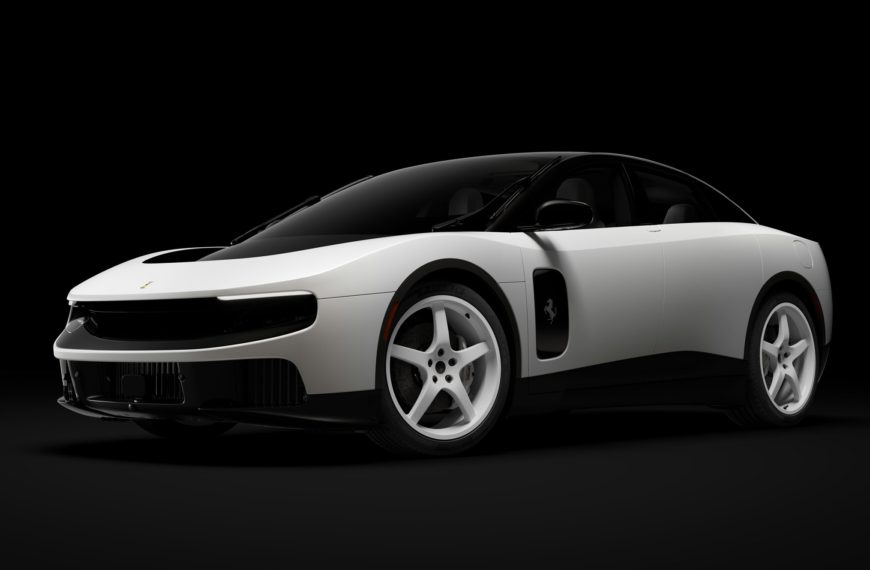
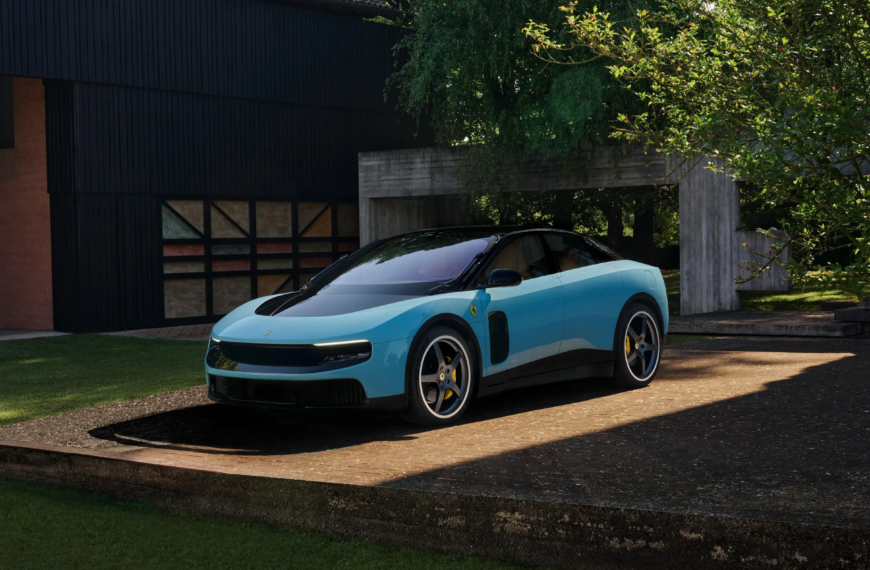
That gap between the W1 and its two closest rivals runs deeper than steering feel alone. Ferrari’s F80 pairs a 3.0 litre twin-turbo V6, a deliberate downsizing from the V12s that defined its past halo cars, with three electric motors: two on a dedicated front axle for what Ferrari calls e4WD, and one at the rear. The front motors don’t just add power, they actively torque-vector the car through corners, and Ferrari’s own engineers have said the goal was making 1,184 horsepower usable and fun rather than simply available. Aston Martin’s Valhalla follows a similar template, using front e-motors for traction and all-wheel drive, but positions the result as the more livable, everyday-usable half of its Valkyrie partnership. The W1 is the outlier of the three. No front axle, no electric torque-vectoring, no all-wheel-drive safety net, just 1,258 horsepower going through the rear tyres alone, managed by the driver rather than a computer.
| Category | McLaren W1 | Ferrari F80 | Aston Martin Valhalla |
|---|---|---|---|
| Drivetrain | Rear-wheel drive only | AWD via e4wD front axle | AWD via front e-motors |
| Engine | 4.0L twin-turbo V8 | 3.0L twin-turbo V6 | 4.0L twin-turbo V8 |
| Hybrid role | Power adder only | Power + torque-vectoring | Power + AWD + PHEV range |
| Buyer appeal | Analog feel, purists | Outright lap-time, track focus | Usable daily hypercar, value |
That last row matters as much as the hardware. At $3.9 million and with a cockpit that offsets the passenger seat to echo a single-seat racer, the F80 is built for buyers chasing the fastest lap, not the most livable commute. The Valhalla, starting around $800,000, roughly a third of the W1’s price, is aimed at buyers who want hypercar numbers without giving up a car they can actually drive to dinner. The W1 sits between those two instincts: not as track-obsessed as the F80, not as practical as the Valhalla, but the only one of the three still betting that an unfiltered connection to the rear axle is worth more than either extreme.
Gone Before It Arrived
Perhaps the most remarkable thing about the W1 has nothing to do with engineering at all. Every one of its 399 allocations sold out well before customers had a finished car to sit in, driven largely by McLaren’s reputation and the strength of the F1 and P1 that came before it. The demand has since spilled into the collector market for things that aren’t even the car itself. Amalgam, a firm that builds museum-grade scale models, sold out a limited run of 1:8 scale W1 replicas priced from $19,995, with a fully bespoke commission version starting at $27,995, roughly the price of a well-optioned hot hatch, for a model that can’t move under its own power. For a car this exclusive, even the miniature version has become something worth queuing for.
That same exclusivity is worth sitting with for a moment, because it complicates any verdict on the W1 as a driver’s car. At over $2 million and limited to 399 units, the car exists in a market where scarcity is as much a part of the product as the powertrain underneath it. Many of these cars will be bought by collectors adding a McLaren to a rotation, not by people planning to put real miles on them, and a hydraulic steering rack and a rear-wheel-drive layout matter less if a car spends most of its life in a climate-controlled garage. None of that makes the engineering underneath any less real. It just means the W1’s genius may end up appreciated by far fewer people than actually own one.
THE LUDICARC TAKE
It was never a race to be the fastest.
The W1 isn’t important because it out-accelerates the F80 or out-prices the Valhalla. It’s important because it proves that even in an era of electrification and software-defined performance, buyers at the very top of the market will still pay a premium for engineering that prioritizes feel over figures. That bet didn’t need luck to pay off. It needed McLaren to trust that the instinct which built the F1 and P1 hadn’t gone out of style, and it hasn’t.