$40M
Chassis 0’s final sale price
36x
Multiple over the $1.1M estimate
8%
Ferrari stock drop after the Luce reveal
$640K
Standard Luce retail starting price
KEY TAKEAWAYS
• Chassis 0, the first production Ferrari Luce, sold for $40 million at RM Sotheby’s Monterey, the most expensive new car and the most expensive EV ever sold at auction.
• That’s 36 times the $1.1 million pre-sale estimate and roughly 62 times the standard Luce’s $640,000 retail price.
• The sale comes three months after the Luce’s May unveiling sent Ferrari shares down as much as 8% and triggered widespread design criticism, including comparisons to a Honda Accord and a toaster.
• It was a no-reserve charity auction benefiting the Ferrari Foundation. The winning bidder, philanthropist Dr. Herbert Wertheim, also bought the previous record holder, a Ferrari Daytona SP3, for $26 million in 2025.
• Ferrari CEO Benedetto Vigna has separately said the standard Luce is drawing real customer orders into late 2027, a different kind of demand signal than one auction result.
What Actually Sold, and For How Much
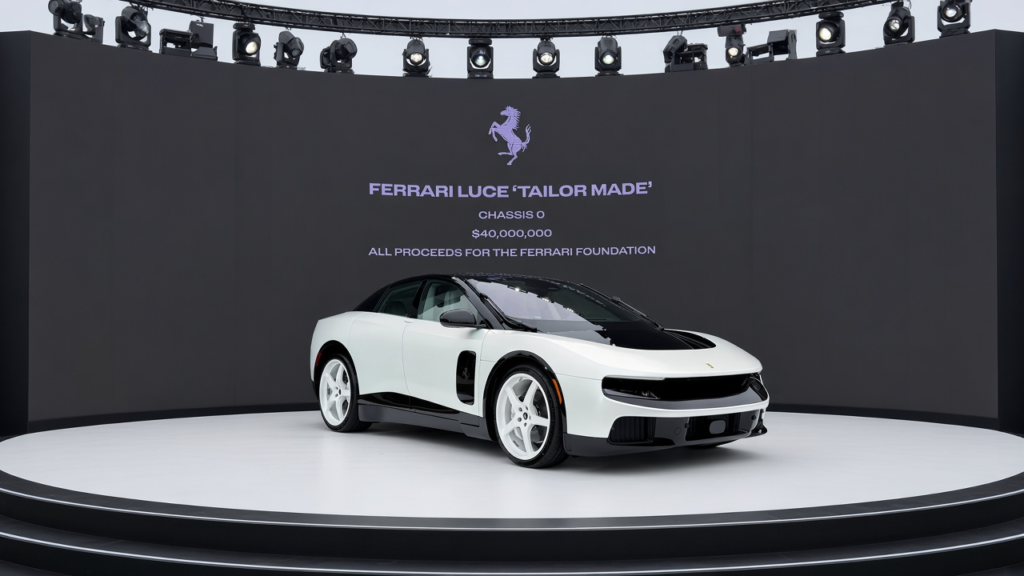
Three months ago, Ferrari unveiled an electric car that much of the internet mocked on sight. On Saturday night, the first production example sold for more than any new car has ever fetched at auction.
Both things happened. The distance between them is the story.
The car is Chassis 0, the first unit off Ferrari’s Luce line, built as a one-off through the brand’s Tailor Made personalization studio. RM Sotheby’s offered it without reserve at its Monterey Car Week sale in California, buyer’s premium waived, so the hammer price and the charitable donation land on the same number.
Bidding opened at $1 million and passed $5 million within moments. It closed at $40 million, about 36 times the pre-sale estimate, with every dollar going to the Ferrari Foundation, a public charity that funds education programs.
What makes that figure remarkable isn’t only its size. It’s what happened three months earlier.
Standard Luce
| Price | $640,000 |
| Production | Series build |
| Paint & trim | Standard options |
| Deliveries | Beginning Oct. 2026 |
Chassis 0
| Price | $40,000,000 |
| Production | First unit built |
| Paint & trim | One-off Tailor Made |
| Proceeds | Ferrari Foundation |
The Backlash That Preceded It
The Luce was unveiled in Rome on May 25, 2026, Ferrari’s first fully electric production car after decades built around combustion and the sound that came with it. The reaction was immediate. Critics compared its rounded, bubble-like body, a sharp departure from Ferrari’s usual angular styling, to a Honda Accord, an Apple Store appliance, and a toaster.
Investors reacted almost as fast. Ferrari’s shares fell as much as 8% on the Milan exchange in the days following the reveal, a single-day drop of more than 6% wiped out roughly £3 billion in market value, before the stock recovered part of that loss within the week.
The sharpest public criticism came from inside Ferrari’s own history.
“At least take the prancing horse off.”
Luca di Montezemolo, former Ferrari chairman, on the Luce’s design
Why One Collector Kept Buying
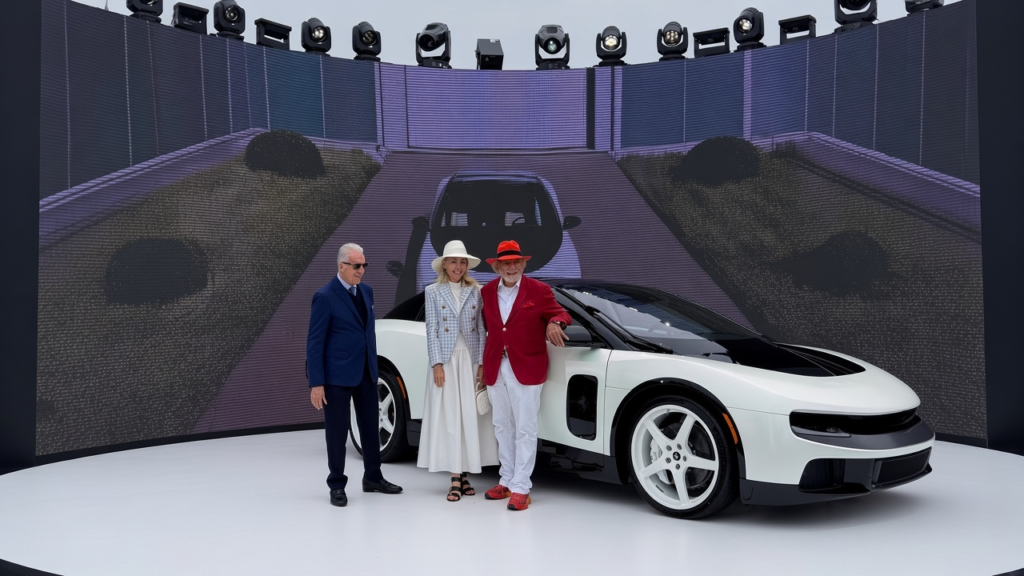
None of that criticism stopped one collector from paying for the car twice.
The winning bidder has been identified as Dr. Herbert Wertheim, a billionaire inventor and philanthropist. He’s also the buyer who set the record this Luce just broke, paying $26 million for a Tailor Made Daytona SP3 at the same Monterey sale in 2025.
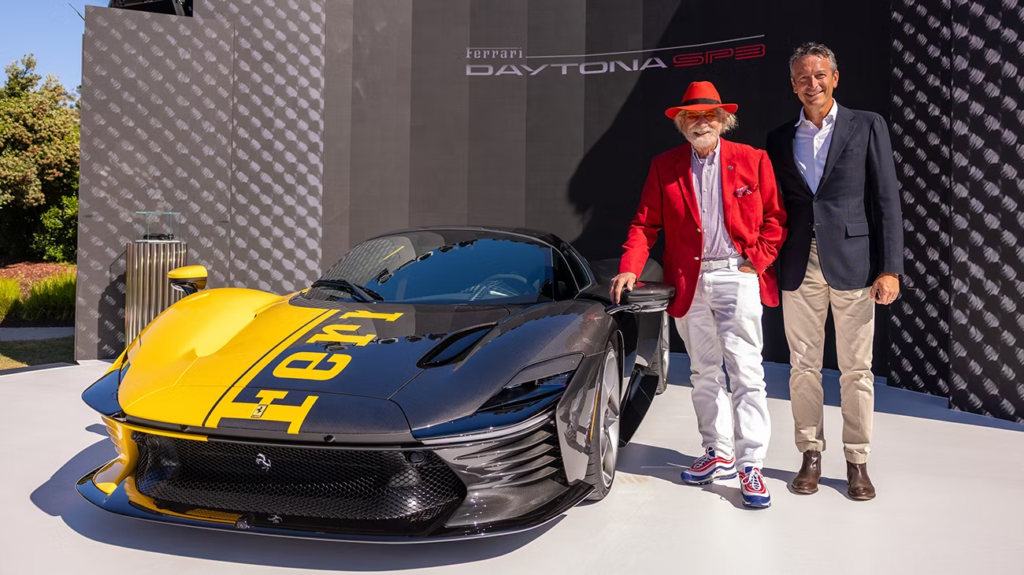
That detail changes how much weight the $40 million figure can carry. It isn’t evidence of a broad market embracing the Luce. It’s evidence that one repeat donor, already inclined to buy Ferrari’s most exclusive charity cars, chose to extend a record he’d already set himself.
A different kind of signal exists further down the price list. Ferrari CEO Benedetto Vigna says the standard $640,000 Luce is drawing genuine customer orders, with a book that now extends into late 2027 for a car whose regular deliveries begin this October. That’s demand from a much wider group of buyers, and it says something the auction result can’t.
What $40 Million Actually Buys
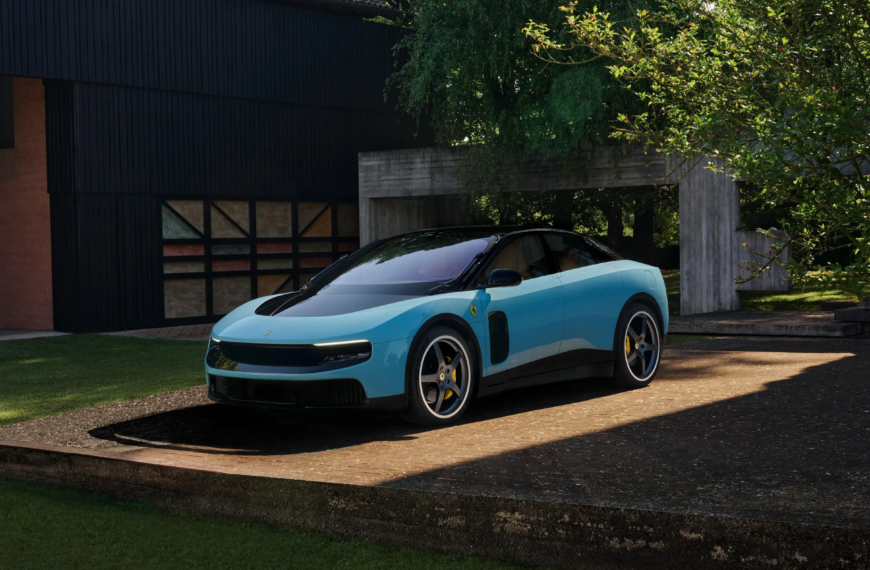
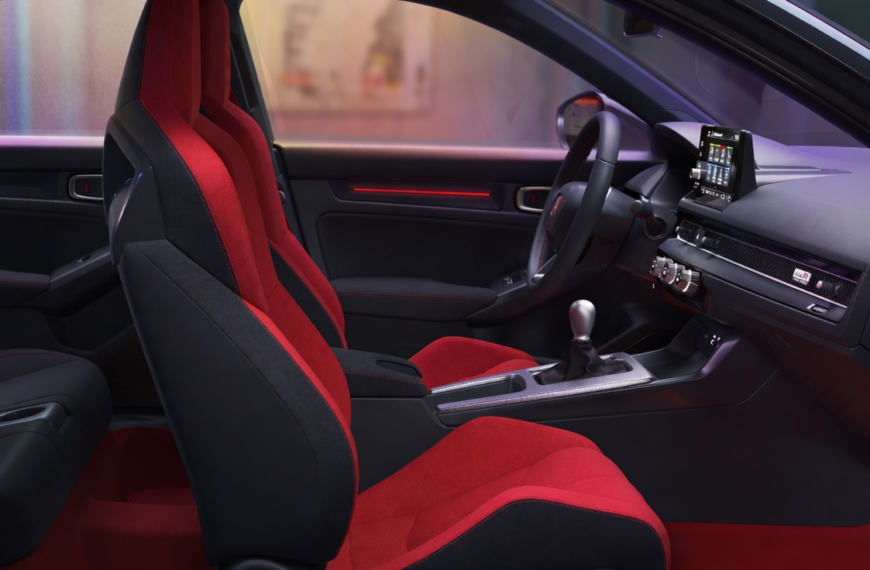
Both signals, the collector’s repeat bid and the order book behind it, point at the same car. It’s a genuinely unusual one. Four electric motors, one per wheel, run on an 800V architecture with a 122 kWh battery, producing a combined 1,036 horsepower and a 2.5-second 0-100 km/h time. Ferrari says the center of gravity sits 95mm lower than the Purosangue, its SUV, and it’s the first series-production Ferrari built with a separate subframe. Inside, physical switchgear replaces touchscreens, and a three-spoke wheel nods to older Ferraris despite everything else being new.
What makes Chassis 0 specifically unique
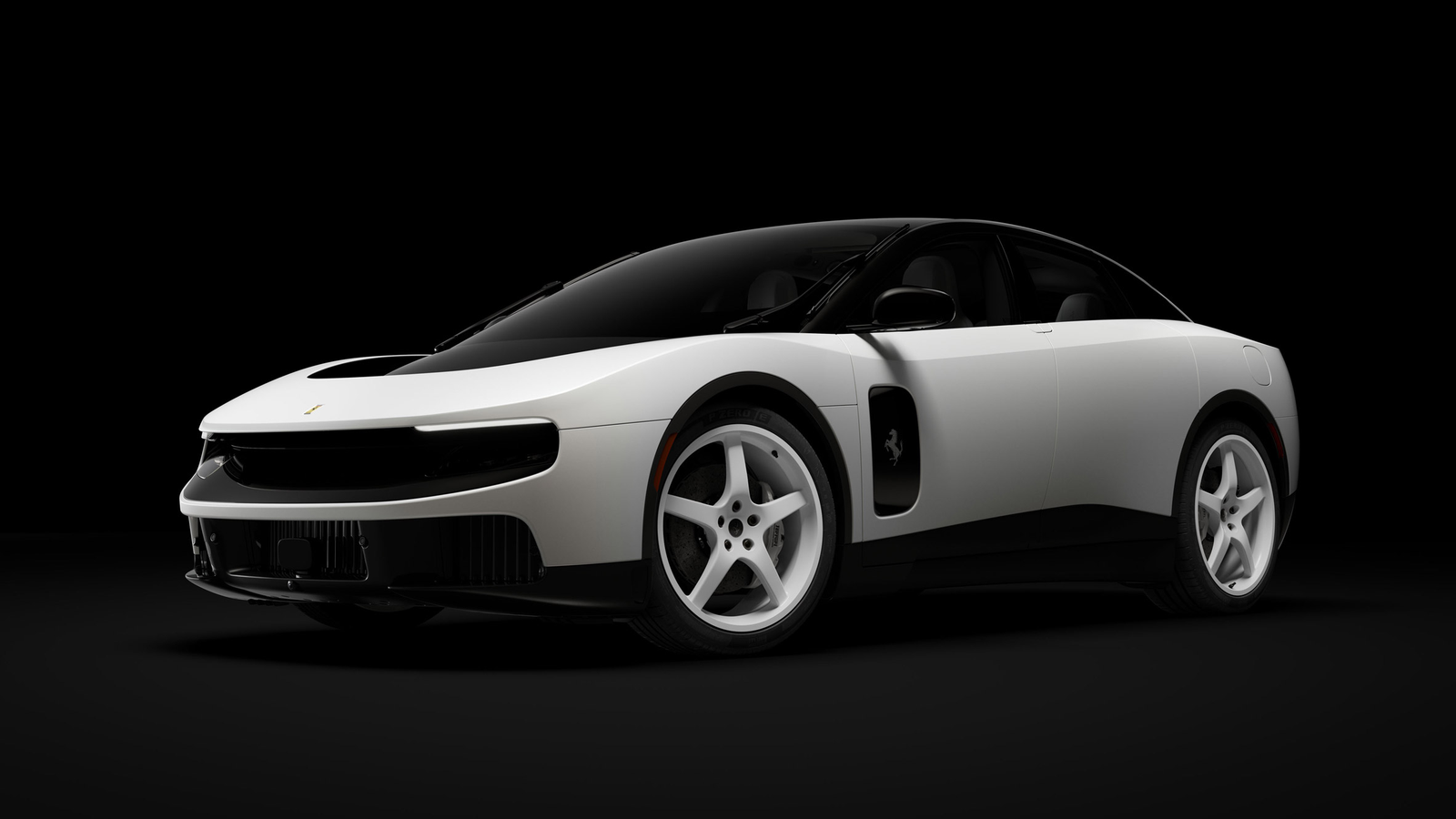
• A one-off “Madreperla Semi-Gloss” paint that shifts from green to violet depending on the light.
• Le Mans metallic leather in Perla with Grigio Corvara accents, the first Luce interior built without black.
• Dedicated wheels, custom brake calipers, and Ferrari badging set against an optical white background.
• A plaque marking it as the first production chassis in the Luce program.
• An interior designed under the direction of Sir Jony Ive, Apple’s former design chief.
For scale, the most expensive electric cars in series production, the Rimac Nevera and Pininfarina Battista, sell for $2.2 to $2.5 million, in far smaller numbers than Ferrari plans for the Luce. Chassis 0 isn’t being measured against those cars anymore. At $40 million, it lands within $8.4 million of the $48.4 million RM Sotheby’s got for a 1962 Ferrari 250 GTO in 2018, one of the highest prices ever paid for any car, vintage or new. It’s being compared to machines that have appreciated for sixty years, after three months on the road.
What This Doesn’t Prove
That comparison to a sixty-year-old classic is flattering, and worth handling carefully. A single auction result can only tell you so much. A no-reserve charity sale during Monterey Car Week draws collectors chasing a philanthropic headline and a piece of automotive history as much as the car itself, a different buyer and a different motivation than someone signing for a standard Luce to drive.
Mainstream EVs have generally lost value fast, as production scaled and battery technology moved on. Whether a heritage brand with strict production limits escapes that curve is a real question this sale raises but doesn’t settle on its own. What it does show is how little a controversial launch matters to collector demand once a car becomes scarce enough, a dynamic that has more to do with Ferrari’s decades of pricing power than with anything specific to the Luce. Standard buyers, and shoppers weighing similarly positioned EVs from Porsche or Lamborghini, are better served by watching the order book than by watching one extraordinary bid. The winning bidder, notably, won’t take immediate possession of the car.
LUDICARC’S TAKE
Ferrari didn’t just survive its roughest launch in years. It converted the backlash into the single most valuable new-car sale in auction history, in public, with no floor under the bid. That doesn’t erase the design criticism, and it doesn’t prove the average buyer has come around on the Luce’s styling. One collector did what he’d done before, at a bigger number.
What the sale does prove is narrower, and more durable. At the very top of the market, controversy isn’t the liability it is everywhere else. A brand with enough history behind it can turn public mockery into a scarcity premium, as long as somebody with enough money is willing to bet on being first. That’s less a fact about the Luce than about what heritage buys a luxury manufacturer when the design fails and the demand doesn’t.
The more meaningful test isn’t the auction room. It’s whether the order book Vigna described holds up once deliveries begin this October, when buyers outside Wertheim’s circle start writing far smaller, still enormous, checks for a Luce they actually plan to drive. Chassis 0 didn’t prove Ferrari was right about the Luce. It proved Ferrari was right about Ferrari.
SOURCES
CNN Business: Exclusive model of Ferrari’s first electric car, Luce, sells for record $40 million
Fox Business: Ferrari’s first Luce EV sells for $40M at California auction
Man of Many: $40 Million Ferrari Luce is the Most Expensive New Vehicle Ever Sold
Electrek: Ferrari CEO says Luce EV is ‘clocking up orders’ despite design backlash