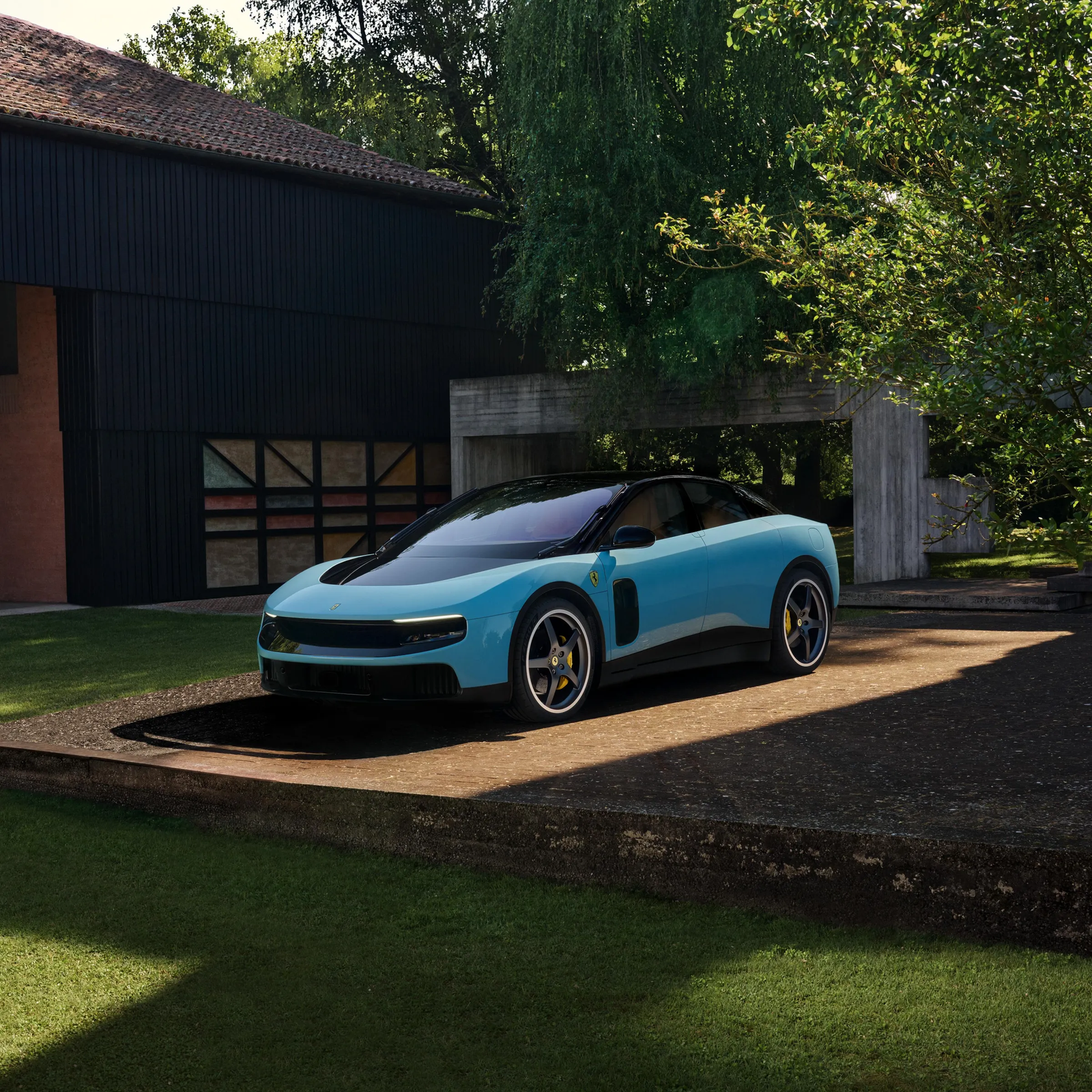
Ferrari just unveiled its first fully electric car, designed by the man who gave us the iPhone, priced at more than most people’s homes. The stock tanked. The critics howled. And the order book is reportedly already full. We try to make sense of all of it.
$640K
Starting Price
1,050
Horsepower
5
Seats (First Ever)
On Monday evening, under the vaulted glass canopy of Rome’s Vela di Calatrava stadium, five Ferrari Luces glided out of darkness into a sea of light. Painted in a spectrum from Ferrari red to ice blue and white — colours that have never appeared on a Prancing Horse before — they moved in choreographed silence. That silence, of course, was the whole point. Ferrari had gone electric. And within 24 hours, it would lose nearly a tenth of its stock market value.
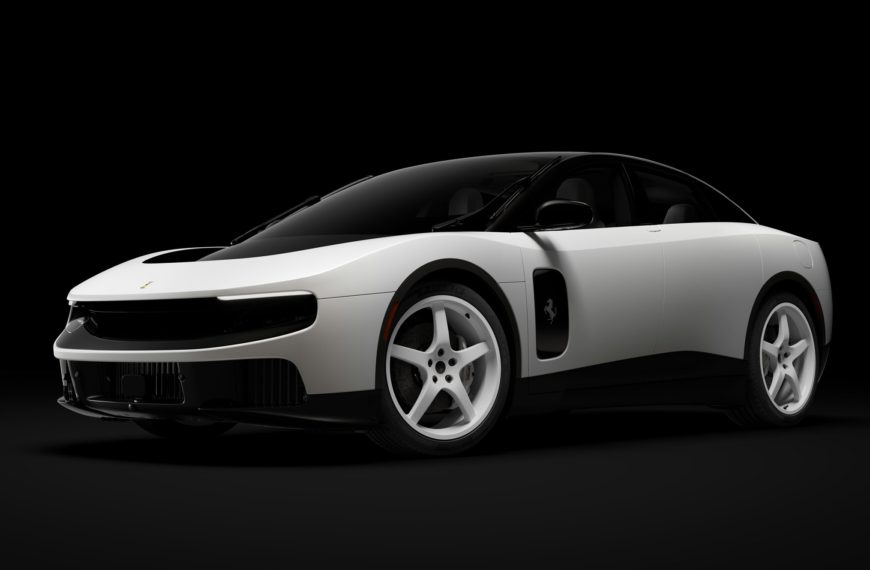
The Ferrari Luce — luce being Italian for “light” — is not just a new car. It is a statement of intent, a redefinition of what Ferrari means, and the most controversial thing to come out of Maranello since the brand’s first SUV. Five years of development. A design team led not by Ferrari’s own chief of design but by Jony Ive, the man who shaped the iMac, the iPod, and the iPhone. And a price tag of €550,000 — roughly $640,000 — for a four-door, five-seat family car that runs on electricity.
We’ve spent the past several days reading everything, watching every reaction, and trying to form an honest opinion. Here is what we found: the truth about the Luce is messier, more interesting, and more significant than either the fanboys or the critics are willing to admit.
The Car Itself
What Ferrari Actually Built
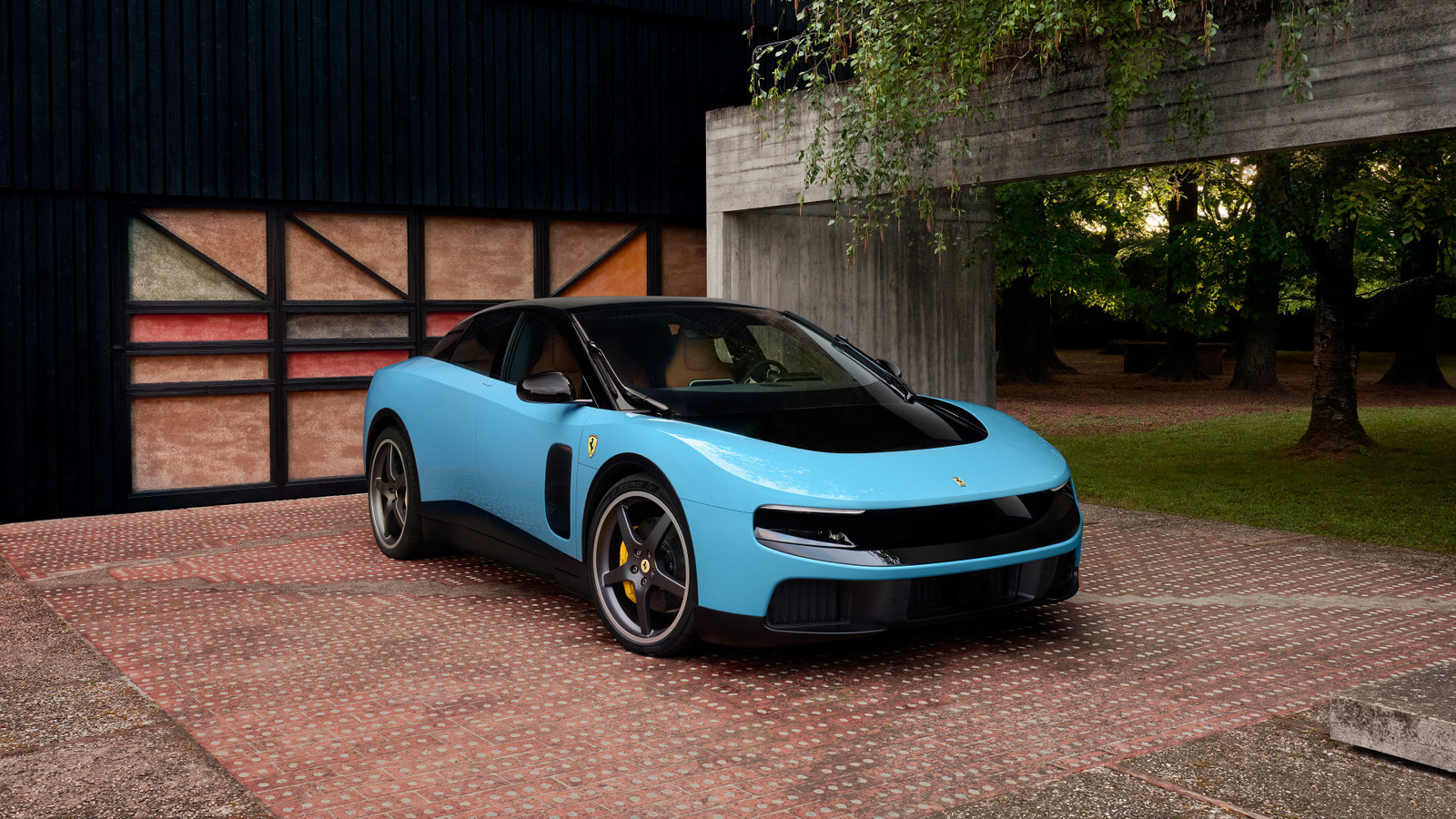
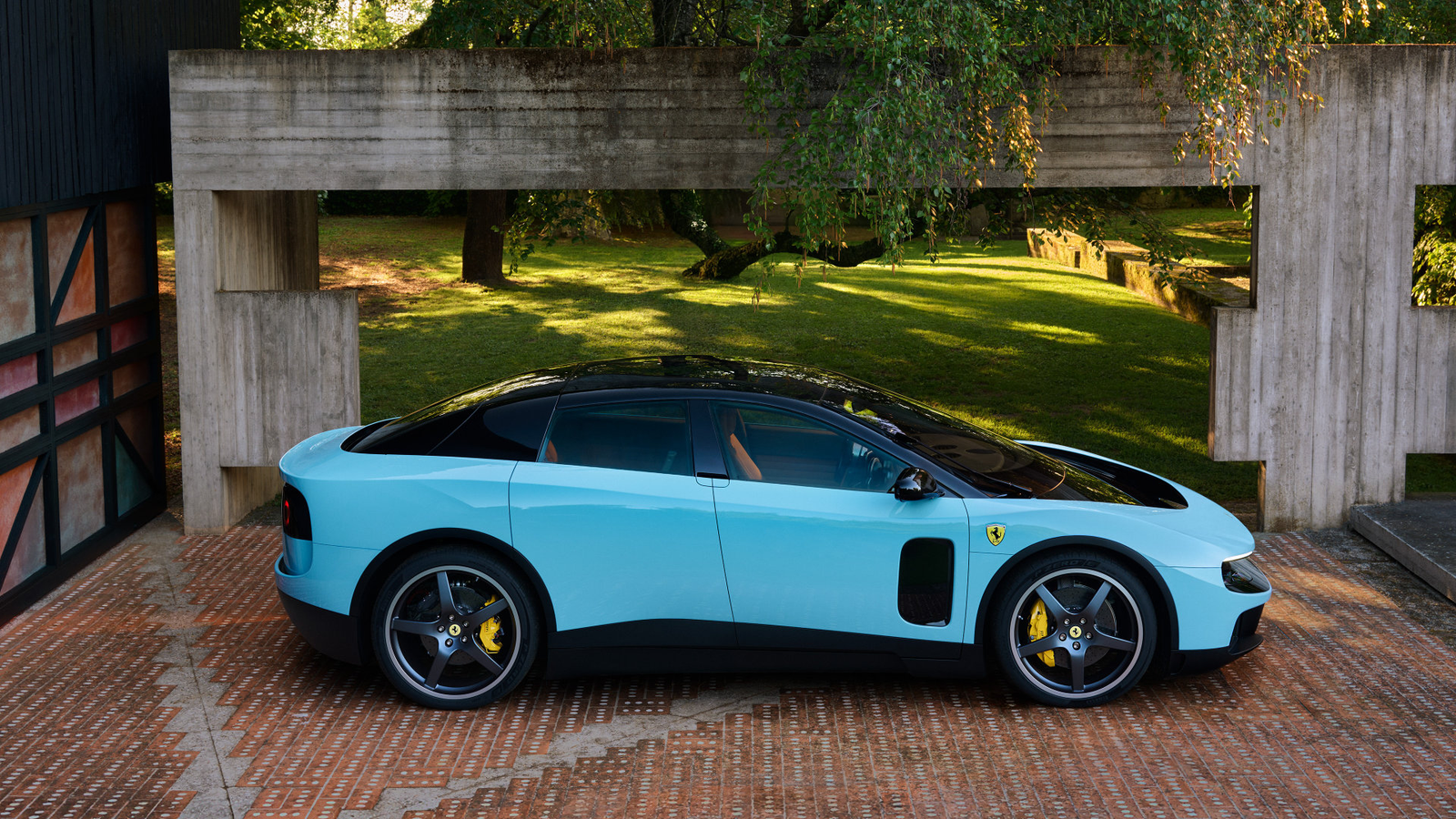
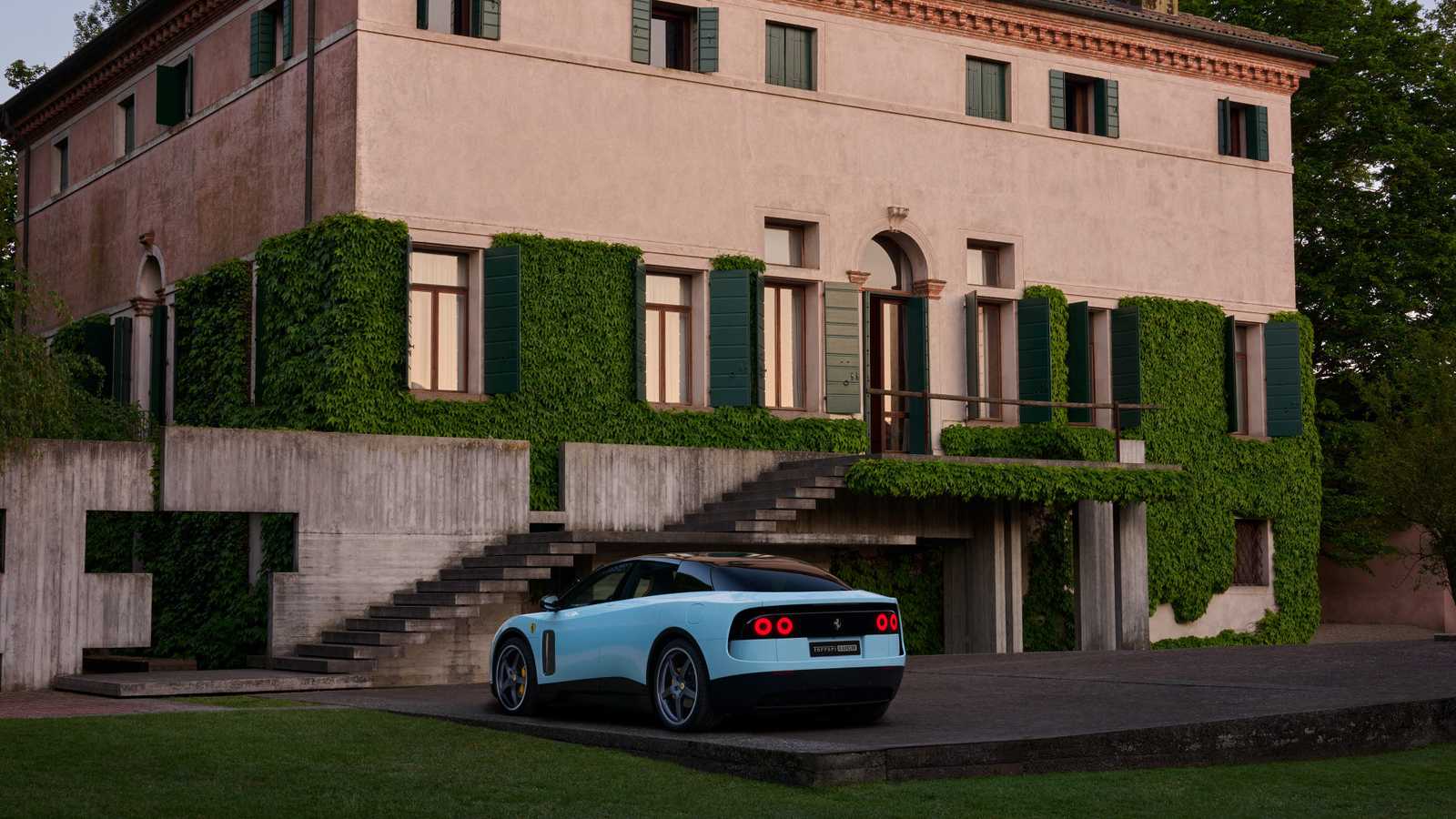
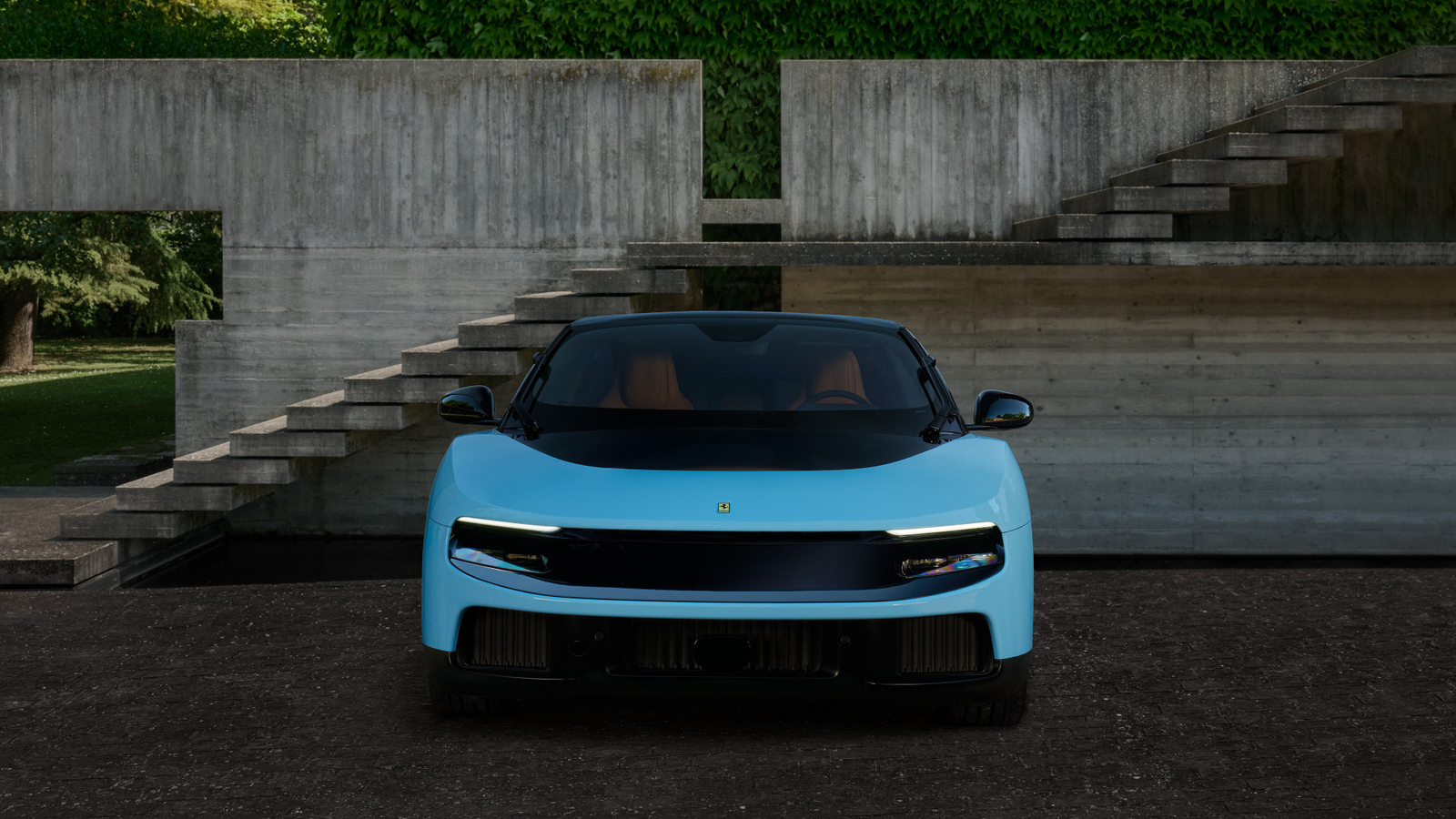
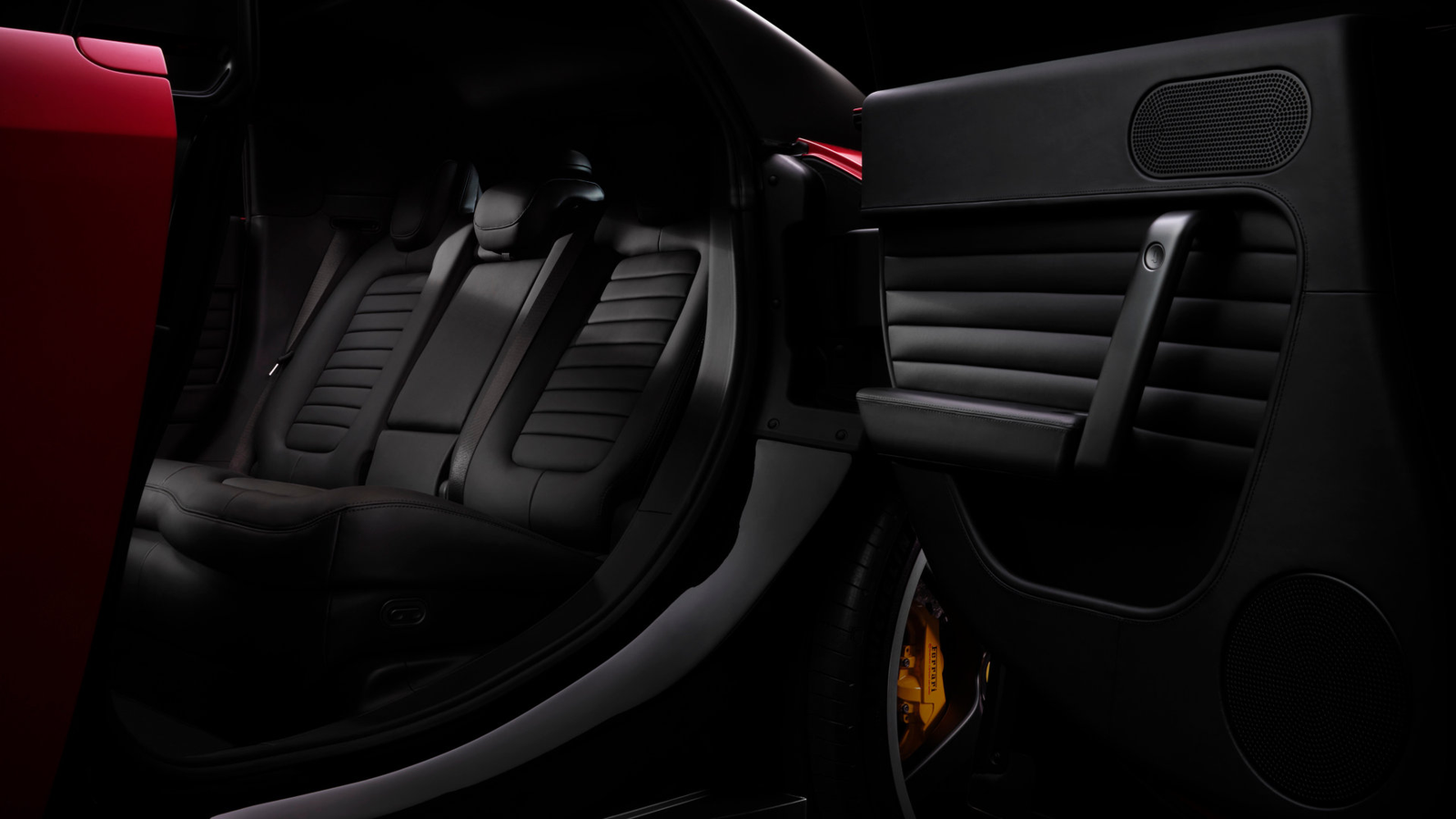
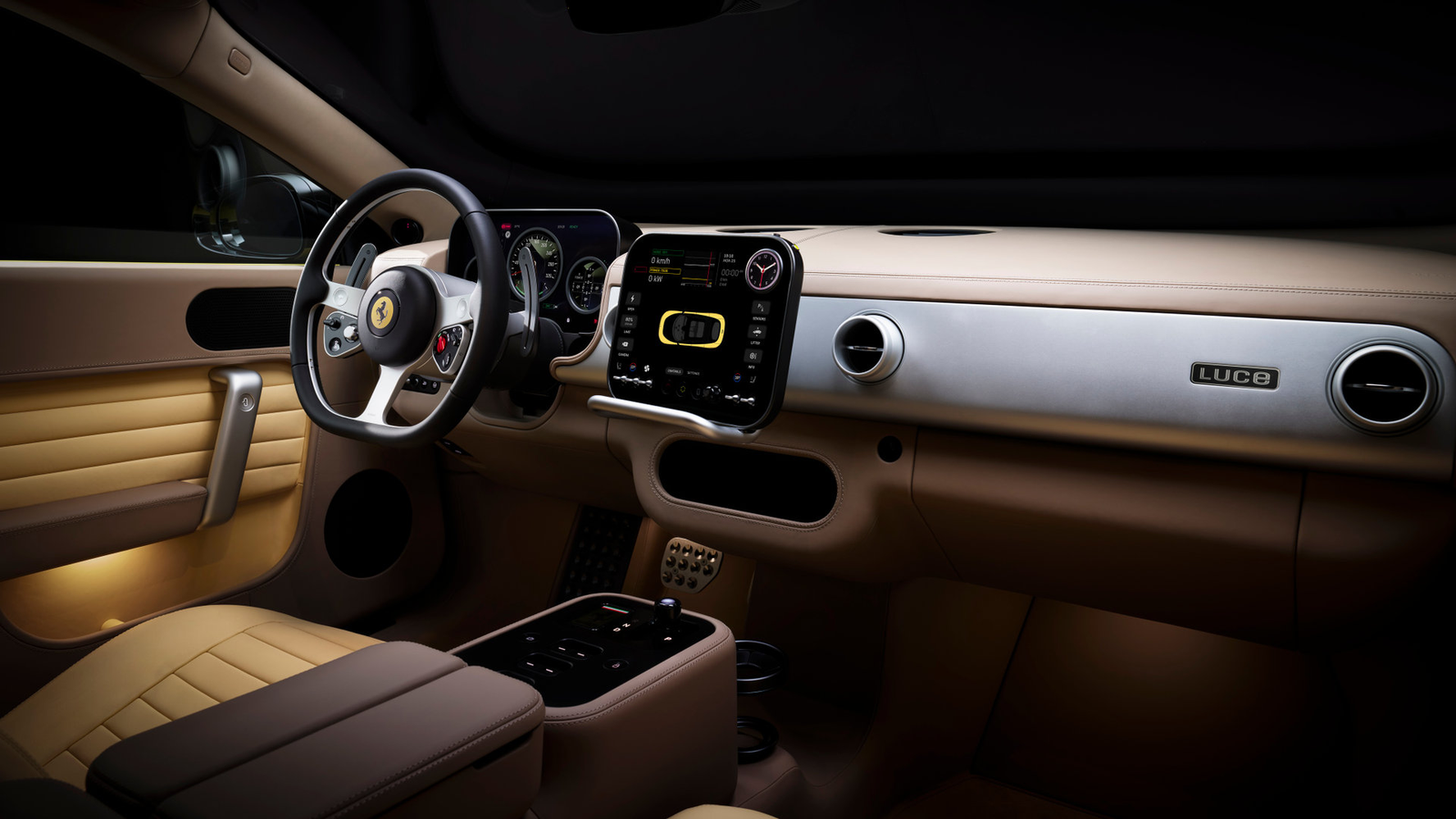
Let’s start with the numbers, because they are genuinely extraordinary. The Luce uses four electric motors — one per wheel — producing a combined 1,050 horsepower. It hits 100 km/h in 2.5 seconds. Its top speed is 310 km/h (192 mph). Its WLTP range is 530 km on a 122 kWh battery running on an 800-volt architecture. It weighs 2.2 tonnes and still has a 600-litre boot. For context, that’s more cargo space than a Honda CR-V.
Every single component was developed and manufactured in-house at Ferrari’s factory in Maranello. That is no small thing. At a time when most luxury EVs are assembling platforms from Tier 1 suppliers and stamping their badge on the result, Ferrari built this from scratch — motors, battery management, software, even the inverters. CEO Benedetto Vigna told reporters at the Rome launch: “It’s the result of five years of work.”
“You have to see the Luce to understand that it has nothing to do with Chinese EVs or those by other brands”.
— Benedetto Vigna, Ferrari CEO, speaking in Modena, May 28, 2026
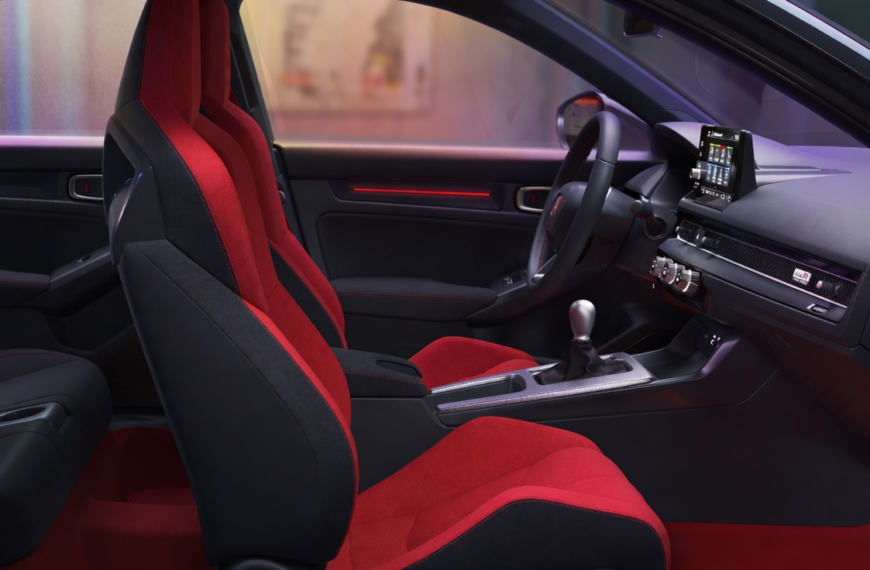
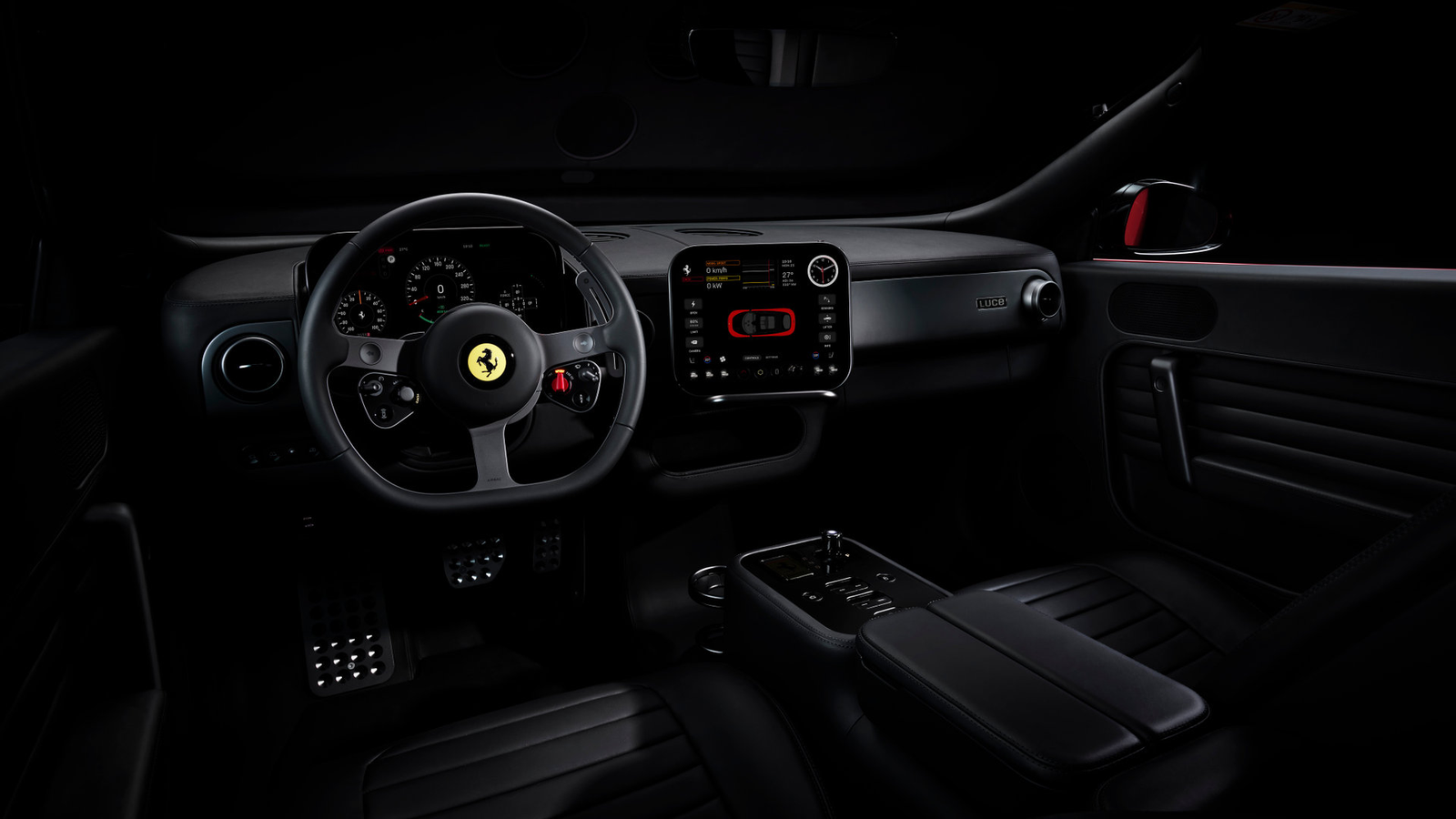
The interior has, almost universally, been praised. It is the part of the car where Ive’s influence is most legible and most welcome. Physical buttons, mechanical toggles, a three-spoke steering wheel machined from a single piece of recycled aluminium, and custom Samsung OLED displays with Apple Watch-style crown controls. Fast Company‘s design editor, who saw the interior months before the full reveal, called it “the closest version of an Apple car the world will ever see.” That feels about right. Every surface is Gorilla Glass or anodised aluminium. It is the most thoughtfully designed cockpit Ferrari has ever produced.
The car also amplifies the natural sound frequencies of its electric powertrain — a deliberate engineering choice to give the Luce some acoustic character without faking a V12. Whether that satisfies the people who buy a Ferrari to hear it scream is another question entirely.
Worth knowing
The Luce was unveiled to Pope Leo XIV at Castel Gandolfo before the public reveal. When the Pontiff asked, “Is this the first four-door Ferrari?” Ferrari President John Elkann replied: “The first five-seater.” The car was presented under a red cover. The Pope sat in the driver’s seat, listened to the controls being explained, and — by all accounts — left impressed.
The Market Reaction
Why the Stock Dropped 8%
Ferrari’s Milan-listed shares fell 8.4% on Tuesday — the day after the unveiling. Its New York shares were down 5.1%. That is a brutal one-day reaction for a company that had been riding high on pre-launch anticipation, and it tells you something real about the gap between Ferrari’s confidence and the market’s.
-8.4%
Ferrari’s Milan stock fell 8.4% the day after the Luce reveal. Analysts at Morningstar attributed it to a mix of “design hate” and the classic “travel and arrive” market dynamic — RACE had run up significantly in the weeks before the launch.
Analysts were careful to note that the sell-off was partly mechanical: Ferrari’s stock had risen significantly ahead of the announcement, meaning some decline was baked in regardless of what they unveiled. Michael Field, chief equity strategist at Morningstar, described the investor mood plainly: “Many fans are disappointed that Ferrari is embracing the EV concept, believing it dilutes the supercar brand, which has modelled itself around classic design and raw, combustion-engine power.”
Auto analyst Pierre-Olivier Essig at AIR Capital was more cutting still. In a note to clients, he wrote that the car looks like “a mix between a Honda Accord EV and Tesla 3,” and that his firm was “lost in translation with Ferrari’s new strategy.” Portfolio manager Fabio Caldato, who owns Ferrari shares through AcomeA SGR, called it an “aesthetic disappointment.” Citi, however, told clients not to be “overly concerned” — the analysts’ view being that it is simply too early to read genuine commercial failure into a social media pile-on.
The commercial reality is that Ferrari already has a waiting list. CEO Vigna confirmed the company has received bank transfers from customers. The order book reportedly extends to the end of 2027. Whether those orders reflect genuine desire for the Luce — or Ferrari’s notoriously selective allocation system, where loyal clients buy new models to maintain their place in the queue for future limited editions — is harder to know.
The Critics
The Men Who Hate It Most
Nobody in the automotive world carries more weight on a Ferrari topic than Luca di Montezemolo — the man who ran the company for decades, oversaw its F1 dynasty, and built the modern Ferrari brand. His reaction to the Luce was damning, delivered in a clip that went viral within hours of the Rome reveal.
“If I say what I think, I’d cause harm to Ferrari”.
— Luca di Montezemolo, former Ferrari Chairman, shaking his head on Italian television
He did say what he thought, eventually. Di Montezemolo told journalists the Luce risks “destroying a legend” and said he hoped Ferrari would “at least remove the prancing horse” from it. Piero Ferrari, the company’s vice chairman and son of its founder, dismissed that view with characteristic brevity: “Those who want to criticise can criticise, but I would reply: see it and try it.”
Italy’s Deputy Prime Minister and Transport Minister Matteo Salvini joined the pile-on with a post on X that read: “Electric, outrageously expensive (550 thousand euros!) and, from an aesthetic point of view, it speaks for itself… It looks like anything but a car from the Prancing Horse. And this is supposed to be ‘innovation’? Who knows what Enzo Ferrari would say.”
Social media verdict
The memes arrived fast. Comparisons made online include: a vacuum cleaner, a camper van, a Nissan Leaf, and “an Apple mouse on wheels.” One Ferrari collector from Montreal who owns 40 of the marque’s cars told the Wall Street Journal: “Oh boy, how ugly she is. How do you justify a 400,000 to 500,000 price for this? Unbelievable.”
The Defence
Why Ferrari Isn’t Backing Down
Vigna has not flinched. Speaking at the Motor Valley Fest in Modena on Thursday — his first public appearance since the Rome backlash — he was direct: “Luce is a disruptive car, an innovative car: it is clear that it puts someone in trouble.” He argued that new engineering platforms require completely new visual languages. “When you have a new technology, you need to make sure that that technology is properly represented in the design, so the design must be different.”
On the price: Vigna says the $640,000 tag is simply the cost of genuine innovation, not a number plucked from the air. He has a point. Ferrari designed and manufactured every component in-house, in Italy, with a five-year development programme. That is not a cheap exercise. The Luce isn’t trying to compete with a Taycan or a Lucid Air. It occupies a category of its own — and at this price, it doesn’t really need volume to succeed.
Ferrari’s chief commercial officer Enrico Galliera admitted the company expected this reaction. “We are going to have some great lovers and we are going to have a lot of haters. We do expect this, and I think this is also good.” The car’s interior, he said, was met with “extremely positive” reactions from the non-Ferrari customers who previewed it privately. James May, former Top Gear and Grand Tour presenter and a lifelong Ferrari fan, rallied publicly to its defence. William Li, CEO of Chinese EV maker NIO, praised its design, noting that the car needs to be seen and experienced in motion to be properly understood.
The order book reality
Ferrari’s order book already extends to the end of 2027. Vigna confirmed bank transfers have been received. But Electrek’s analysis raises a genuine question: does this reflect organic demand, or Ferrari’s collector culture, in which VIP clients buy every new model regardless of personal preference to maintain their place in the queue for future invitation-only hypercars? The honest answer is probably: both.
The bigger picture
The EV Market Ferrari Is Walking Into
The timing of the Luce’s arrival is, to put it mildly, complicated. Rival Lamborghini has cancelled its planned EV due to a lack of demand. Bentley has delayed its first electric model multiple times. Porsche’s Taycan, once the gold standard of the luxury EV segment, has been struggling commercially. Lucid’s Air, the most technologically impressive long-range luxury EV on sale, has barely registered in sales terms.
The luxury EV market is not, at this moment, a sure thing. Ferrari knows this. Vigna said back in 2025, when the car’s technology was first previewed: “It’s an addition, not a transition.” The company has revised its 2030 electrification targets to just 20% fully electric vehicles — down from a previously stated 40%. The Luce is a statement, a proof of concept, and a bet on a specific type of buyer: the ultra-wealthy tech entrepreneur, the Silicon Valley founder, the person who wants a Ferrari that fits a family and a lifestyle — and who, crucially, can afford to not worry about whether they’re getting a “deal.”
Vigna spent years as an executive at a chipmaker in Silicon Valley before taking the reins at Ferrari in 2021. He knows that community. He knows what they want. The Luce, in many ways, is a car built for the person who would have bought the Apple Car — had Apple ever actually built one.
“True innovation does not look for immediate consensus, nor does it stem from the ordinary.”
— Benedetto Vigna, CEO of Ferrari, via LinkedIn, May 26, 2026
Our Take
The Honest Assessment
Here is what we believe, having looked at every angle of this story.
The criticism of the design is legitimate. The Luce does not look like a Ferrari. It looks like something that was designed by the team that made the iPhone — which it was. Whether that is a problem depends entirely on who you think Ferrari’s future customers are. For the generation of petrolheads who fell in love with the 360 Modena or the F40, this car is a kind of grief. Their Ferrari — the one that screams, the one that turns every head, the one you’d recognise from a mile away — is nowhere to be found in the Luce. That grief is real and it deserves to be taken seriously.
But Vigna’s defence is also correct. Ferrari is not abandoning combustion engines. Its hybrids will still scream. The 12Cilindri still exists.
The Luce is not a replacement for anything — it is an addition, aimed at a different kind of buyer who represents a different kind of wealth. If Ferrari can pull off the commercial bet — and the order book suggests it might — it will have done something genuinely remarkable: proven that an electric car can carry the most emotionally charged badge in automotive history without diminishing what that badge means.
The 8% stock drop is noise. The interior is a masterpiece. The exterior will divide opinion for years. And we will not know whether any of this actually worked until the first Luces reach customers’ driveways in Q4 — and the real reviews begin.
Ludicarc Verdict
Right move. Wrong moment. Possibly right car.
The Ferrari Luce is genuinely extraordinary in its engineering, polarising in its design, and brave in its intent. Whether the market embraces it is a separate question from whether it was the right car to build. We think it was. The critics are louder than the buyers — and the buyers already have their bank transfers in.
What works
- 1,050 hp, 2.5s 0–100, 530 km range — the numbers are genuinely astonishing
- Interior design is universally praised — Ive’s best non-Apple work
- Fully in-house engineering at Maranello — no shared EV platform compromise
- Orders already flowing, bank transfers confirmed, book to end of 2027
- 800V architecture, 600L boot, first Ferrari five-seater — practically unique
What doesn’t
- Exterior design divides deeply — doesn’t read as Ferrari to most enthusiasts
- Stock fell 8.4% — market clearly wasn’t fully prepared for what it got
- Former chairman publicly asking for the badge to be removed — that’s a wound
- Luxury EV market is soft globally — Lamborghini cancelled, Bentley delayed
- $640,000 for something memed as “an Apple mouse on wheels” is a hard sell to legacy fans
© 2026 Ludicarc · Analysis based on reporting from CNBC, BBC, Reuters, CNN, Bloomberg, Electrek and Il Sole 24 Ore · June 2, 2026
All figures cited are from Ferrari’s official press materials or verified media reports at time of publication