$899
Pixel 11 starting price, +$100
256GB
New base storage, up from 128GB
20%
Claimed Tensor G6 power efficiency gain
7 yrs
OS, security & Pixel Drop updates
KEY TAKEAWAYS
• All four Pixel 11 phones cost $100 more than their 2025 counterparts; Google has pointed to industry-wide RAM supply shortages as a factor.
• Hardware changes are mostly small: a thinner all-glass camera bar, doubled base storage, faster wireless charging, and a new Titan M3 security chip.
• The Pixel 11 Pro’s base configuration actually drops to 12GB of RAM, down from the Pixel 10 Pro’s 16GB starting tier.
• The headline feature is software: Android 17 is being marketed as an “Intelligence System” built around Gemini, alongside new tools like Rambler and camera-integrated Circle to Search.
• An early Geekbench leak suggested the Tensor G6 trails rival chips by a wide multi-core margin, though retail units and later tests may look different.
What’s Actually New in Hardware
The Pixel 11 costs more than last year’s model, ships with less RAM on some Pro configurations, and trailed rivals in an early benchmark leak. Yet at its Made by Google event on August 12, 2026, the company spent most of its keynote talking about artificial intelligence rather than silicon. That wasn’t an oversight. It was the plan.
Google is no longer trying to win the smartphone race on hardware specifications. It’s trying to win it on software, and specifically on Gemini. Everything about how the Pixel 11 lineup was built, priced, and pitched follows from that shift, starting with what actually changed under the glass.
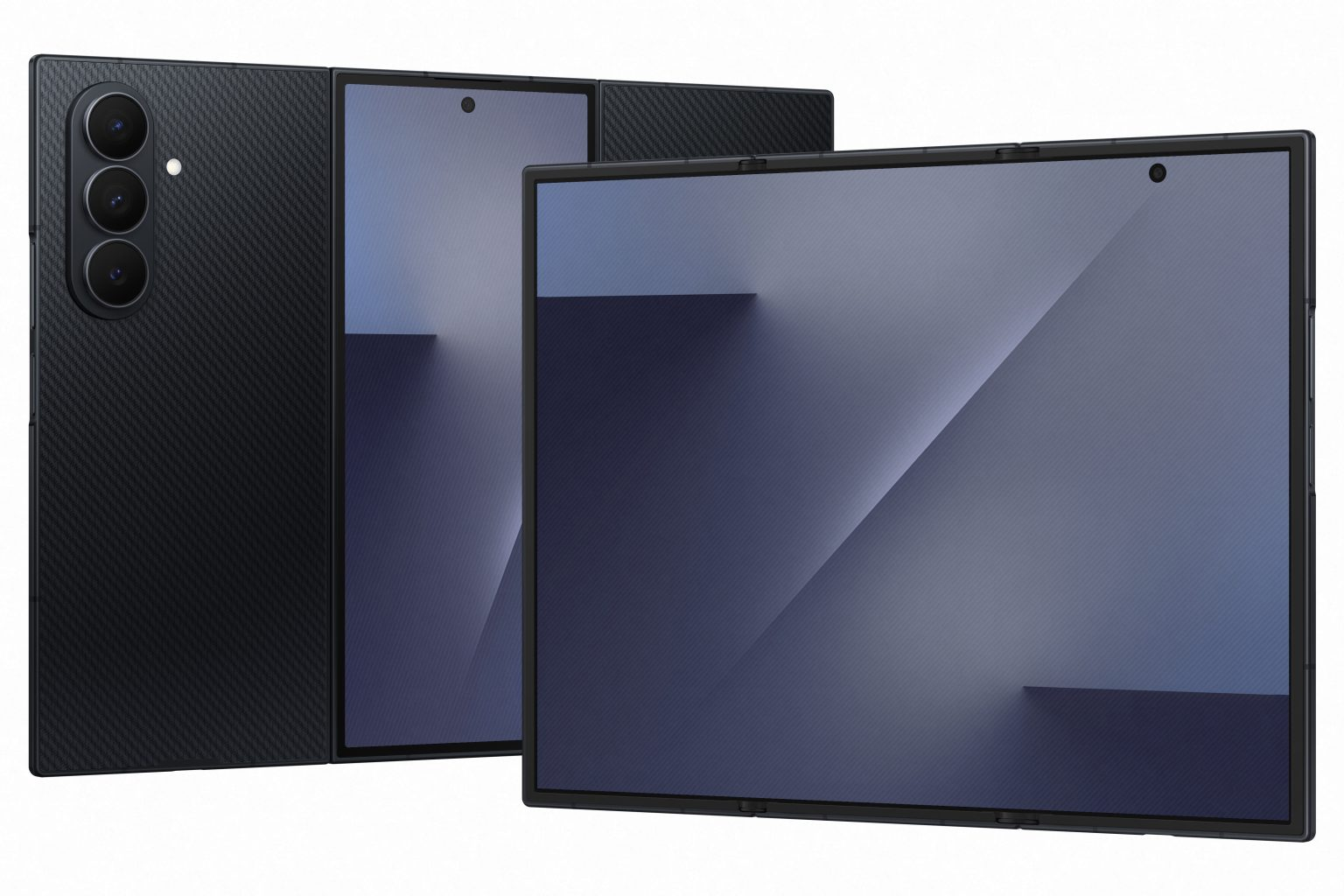
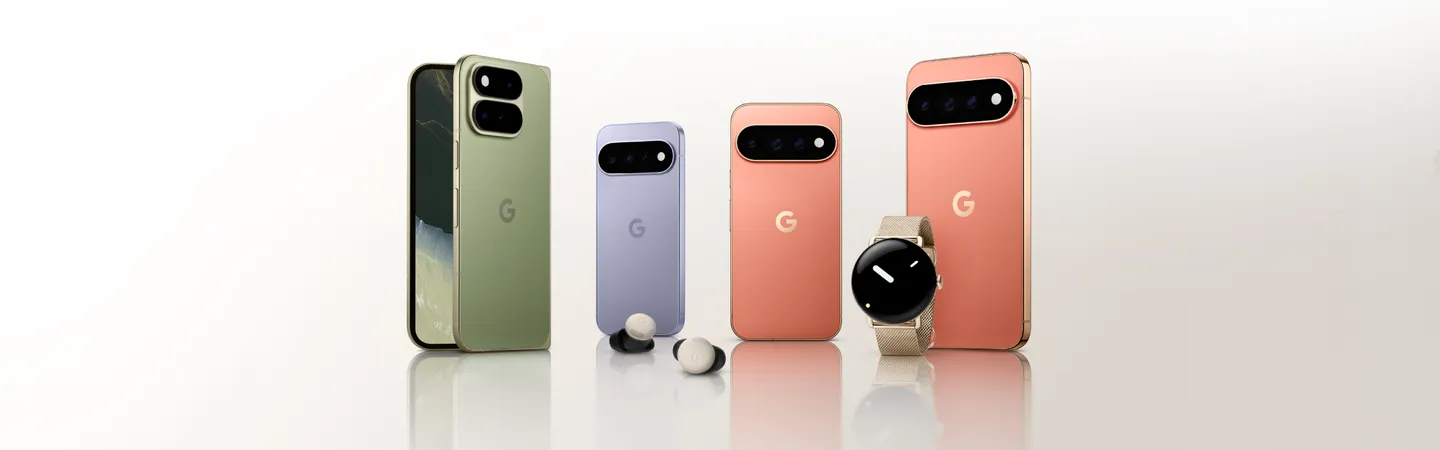
The lineup itself is familiar: Pixel 11, Pixel 11 Pro, Pixel 11 Pro XL, and Pixel 11 Pro Fold, alongside a Pixel Watch 5 and a new item tracker called Pixel Tag. But the physical changes to the phones themselves are modest, closer to a refinement pass than a redesign.
The base Pixel 11’s most visible change is a camera bar Google says is more than 40% thinner than last year’s, now a single sheet of glass stretching across the back. The main sensor grows to 48 megapixels, paired with a 13-megapixel ultrawide and a 10.8-megapixel 5x telephoto. Wireless charging jumps from 15W to 25W, and base storage doubles to 256GB, achieved partly by discontinuing the cheaper 128GB tier outright.
The Pro and Pro XL add HiLight, a ring of LEDs around the camera flash that glows during calls or hands-free Gemini interactions, plus a display coating Google says more than doubles scratch resistance. Camera hardware moves to a 50-megapixel main sensor, a 48-megapixel ultrawide, and a 48-megapixel 5x telephoto.
The Pro Fold sees the most substantial hardware work in the lineup: a redesigned gearless hinge meant to reduce crease visibility, a lighter, thinner chassis, and a glass-fiber composite back Google calls significantly more crack-resistant. The company claims the device is three times more durable than its predecessor, while IP68 water and dust resistance carries over unchanged.
Pixel 10 (2025)
| Starting price | $799 |
| Base storage | 128GB |
| Wireless charging | 15W |
| Camera bar | Standard thickness |
Pixel 11 (2026)
| Starting price | $899 |
| Base storage | 256GB |
| Wireless charging | 25W |
| Camera bar | 40% thinner, all-glass |
Tensor G6: Incremental Silicon, Contested Gains
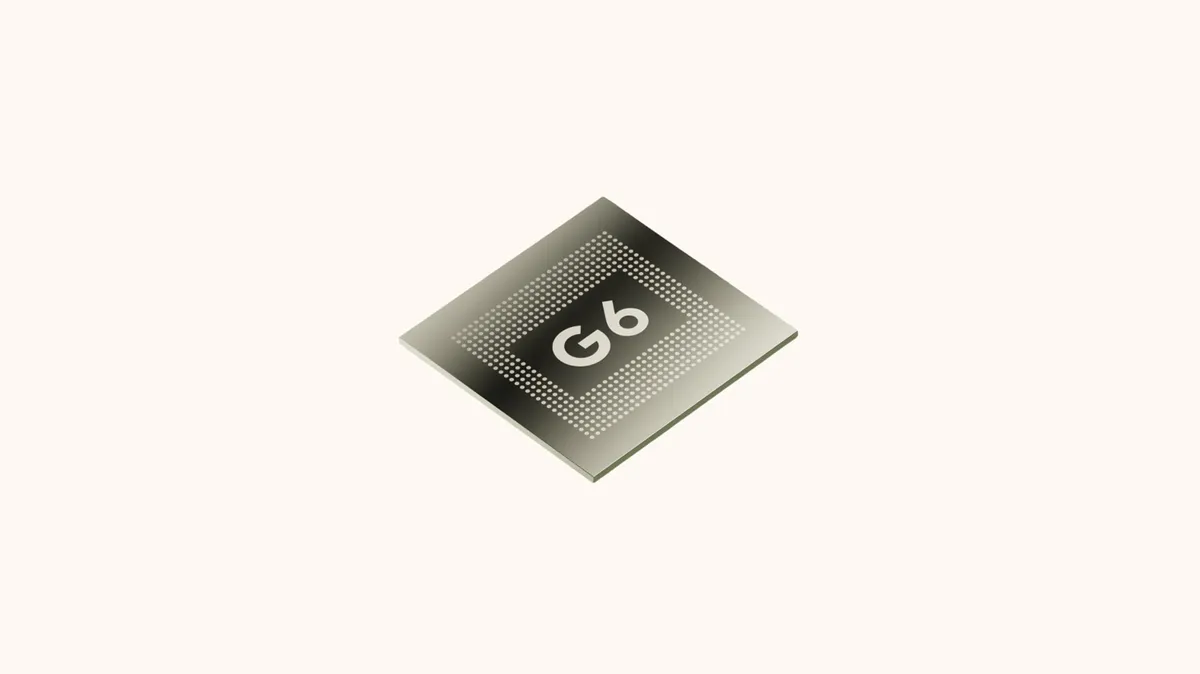
Every phone in the lineup runs on the Tensor G6, Google’s first chip fabricated on a more advanced process node than its predecessor, though outlets disagree on exactly how advanced. Most coverage describes it as built on TSMC’s 2nm N2 node, while at least one detailed teardown maintains it is still a 3nm part despite the marketing. Either way, Google is pairing it for the first time with a MediaTek 5G modem instead of the Samsung-made modem used in prior Tensor chips, a swap meant to address the heat and battery drain issues that dogged earlier Pixels.
Google’s own performance claims are straightforward: 25% faster web browsing, 15% faster app loading, and roughly 20% better power efficiency than the Tensor G5, alongside a Tensor Processing Unit the company says is 50% more powerful for on-device AI tasks like live translation and Night Sight processing.
Tensor G6, in brief
• 7-core CPU layout: one Arm C1-Ultra core at 4.11GHz, four C1-Pro cores at 3.38GHz, two C1-Pro cores at 2.65GHz. That’s one fewer core than the Tensor G5, with no mid-tier “Premium” cores this generation.
• GPU upgraded to a PowerVR CXTP-48-1536, which Google and chip watchers describe as roughly 20% more power-efficient than the previous generation’s GPU.
• New MediaTek M90 5G modem, rated for downloads up to 12Gbps and up to 18% lower power draw than the outgoing Samsung modem.
• Paired with a new Titan M3 security chip, which Google says brings post-quantum cryptography to the lineup for the first time.
Real-world numbers are less settled. A Geekbench 7 listing that surfaced ahead of launch for the Pixel 11 Pro XL showed a single-core score of 2,112 and a multi-core score of 5,196. That’s only a marginal gain over the Pixel 10 Pro XL’s 1,876 and 5,102, and reportedly around 39% behind the iPhone 17 Pro and 49% behind the Galaxy S26 Ultra in multi-core workloads. Pre-release Geekbench listings are easy to spoof and retail units are typically better optimized than test units, so the gap could narrow once independent reviewers get hardware in hand. Still, it’s a rockier start for Tensor G6 than Google’s efficiency claims suggest.
“Big on software upgrades, less on hardware upgrades.”
Android Central, on the Pixel 11 series
The Real Upgrade Is Software
Where Google spent most of its keynote time was Android 17, which the company is now marketing not as an operating system but as an “Intelligence System,” a shift meant to signal that Gemini runs continuously in the background rather than waiting to be summoned. The centerpiece is Gemini Intelligence, a proactive assistant Google says can offload routine tasks like reordering a regular grocery list, booking a ride, or resurfacing information before a person thinks to ask for it.
Several smaller tools reinforce that pitch. Rambler is a new voice-input engine designed to handle the way people actually talk, including run-on sentences, filler words, and unstructured speech, instead of requiring carefully phrased commands. Circle to Search, previously limited to the screen, can now be triggered directly from the Pixel Camera to identify objects, translate text, or answer questions about whatever the camera is pointed at. Gemini can also translate video on the fly, including dubbing the audio into a chosen language, and Live Transcribe has been expanded to support American Sign Language translation through the camera, a genuinely new accessibility feature rather than a speed bump on an existing one.
On the Pro models, Gemini Intelligence is bundled with six months of free Google AI Pro, the company’s premium subscription tier that normally costs $20 a month and includes higher usage limits and 2TB of cloud storage. That’s a meaningful giveaway, but it’s also half of the twelve months Google bundled with the Pixel 10 Pro a year earlier. That’s a quiet trim sitting right next to the marketing push for the same AI features.
The Price Question
Every phone in the family costs $100 more than its direct predecessor: $899 for the Pixel 11, $1,099 for the Pro, $1,299 for the Pro XL, and $1,899 for the Pro Fold. Google has attributed part of that to an ongoing memory chip shortage pushing component costs up industry-wide, not a Pixel-specific problem, but one it’s passing on directly.
The base Pixel 11’s storage bump softens the increase somewhat, since the old $799 configuration came with half the storage. The Pro line tells a different story: both the Pro and Pro XL now start at 12GB of RAM, down from the Pixel 10 Pro’s 16GB base, with 16GB reserved for the 512GB and 1TB tiers. Buyers who don’t upgrade storage are effectively paying more for less memory.
What the Price Hike Gets Right
It’s worth separating the parts of this cycle that are genuinely consumer-friendly from the parts that aren’t. Doubling the base Pixel 11’s storage to 256GB removes a tier most reviewers considered too small in the first place, and the jump to 25W wireless charging is a real, usable improvement rather than a marketing figure. The Titan M3 chip’s post-quantum cryptography support is a legitimate first for a mainstream phone line, not just a checkbox spec. On the Pro Fold specifically, the durability claims are backed by concrete engineering changes (a redesigned hinge and a new composite back) rather than vague promises, and they respond directly to durability complaints that followed the Pixel 10 Pro Fold.
The price increase also isn’t unique to Google. Rising memory costs have pushed other manufacturers, including Samsung’s Galaxy S26 series, to raise prices this year as well, which suggests at least part of this is an industry-wide cost pressure rather than a Pixel-specific markup.
A Wider Shift in How Phones Compete
This isn’t a Pixel-only story. Apple has spent the past two cycles building its iPhone marketing around Apple Intelligence rather than chip generation numbers. Samsung markets Galaxy AI as heavily as it markets its cameras, wrapping years of promised AI feature updates into the pitch for hardware that, generation to generation, looks increasingly similar. Google’s Gemini Intelligence push with the Pixel 11 is the same playbook, applied to Google’s own ecosystem.
The underlying pressure is the same across all three companies: camera megapixels, chip benchmarks, and battery capacities are converging toward a point of diminishing returns, where each year’s gains are smaller and harder for an average buyer to feel. Software doesn’t have that ceiling in the same way. A new proactive assistant or a new translation feature can feel dramatically different from one year to the next, even when the silicon underneath barely moves. Smartphones are no longer competing on silicon alone; they’re competing on what that silicon quietly runs in the background.
LUDICARC’S TAKE
For more than a decade, flagship smartphones competed on cameras, processors, displays, and battery life, numbers a buyer could line up side by side and compare. The Pixel 11 is a sign that comparison is no longer the whole contest. Google raised prices across the board, trimmed a memory tier on its Pro models, and watched an early Tensor G6 benchmark land behind rivals, and still built its entire launch around Gemini Intelligence rather than the chip. That’s not a coincidence; it’s a strategy. Hardware is increasingly becoming the platform through which companies sell software experiences, subscriptions, and intelligent assistants, and every major phone maker is now making some version of the same bet. The Pixel 11 matters less because it costs $100 more than it did last year, and more because of what that price increase is quietly buying: a phone built to sell software first.