What the domain market rewards and how to buy into it
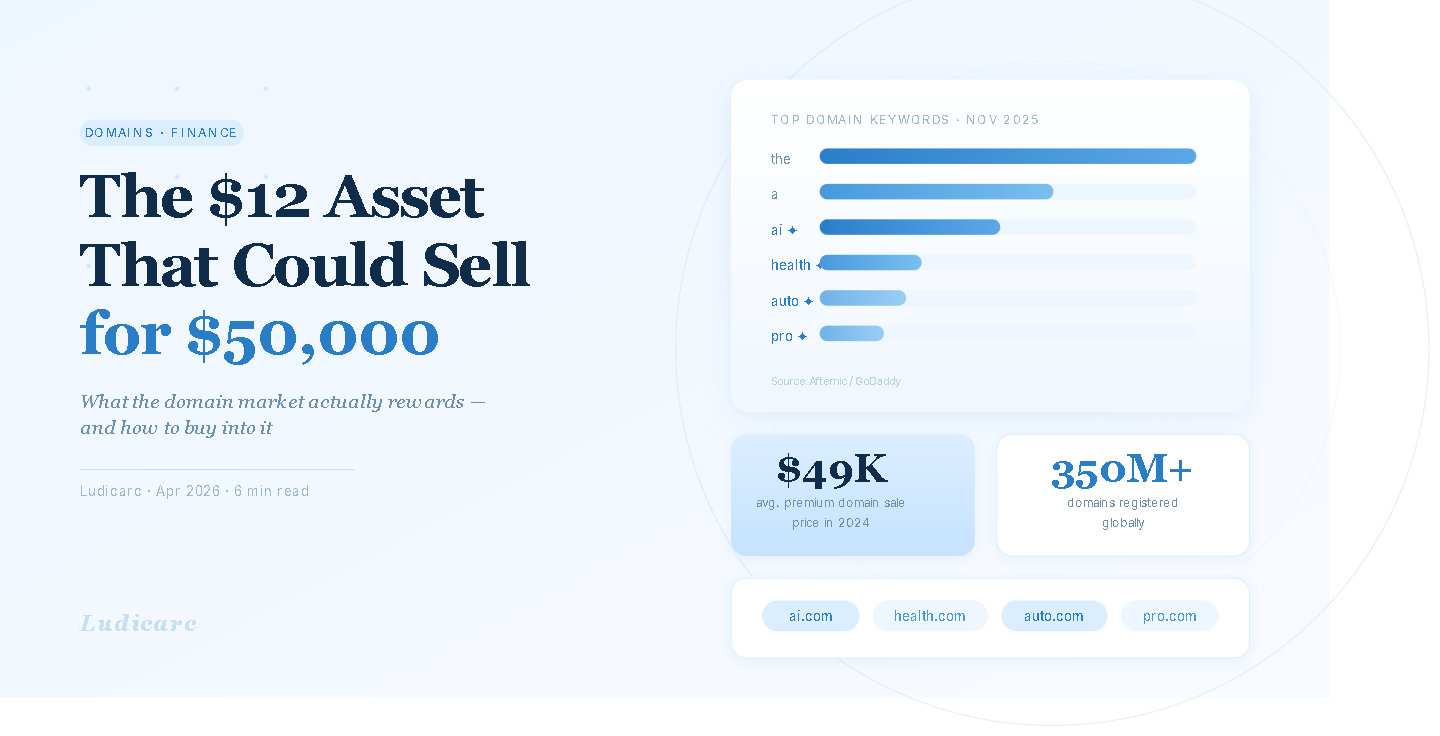
350M+
Domain names currently registered globally
$49K
Average sale price of a premium domain in 2024
~$12
What a standard .com costs per year to hold
The most underrated asset on the internet
There are 350 million registered domain names. Most of them are parked, forgotten, or held by squatters who registered them on a hunch. A small fraction of them are genuinely valuable — so valuable that a single domain has sold for over $30 million. The gap between a bad domain and a great one isn’t technology or luck. It’s knowing what the market actually rewards.
This piece covers both sides of that equation. First, how to buy your first domain the right way — without making the mistakes that cost most beginners money or flexibility down the road. Then, how the secondary market works, what sells, and how to think about domains not just as addresses but as assets worth holding.
Part one — buying your first domain
Most people buy a domain the wrong way. They think of a name they like, search for it, find it’s taken, add a hyphen or a number, and call it done. That approach produces a domain that works technically and fails at everything else. Here’s how to do it properly.
A domain is the one piece of your online presence that no algorithm can take away, no platform can suspend, and no policy change can affect. That alone makes it worth owning correctly.
Part two — domains as an investment
Domain investing is a real market with real returns — but it requires understanding what actually sells. The days of registering random words and waiting for a buyer are over. The market has matured, and what moves at premium prices follows specific, learnable patterns.
The most useful data window into this right now comes from Afternic — GoDaddy’s domain marketplace and one of the largest secondary market platforms globally. Their November 2025 data on top-selling keywords reveals exactly what buyers are actually paying for.
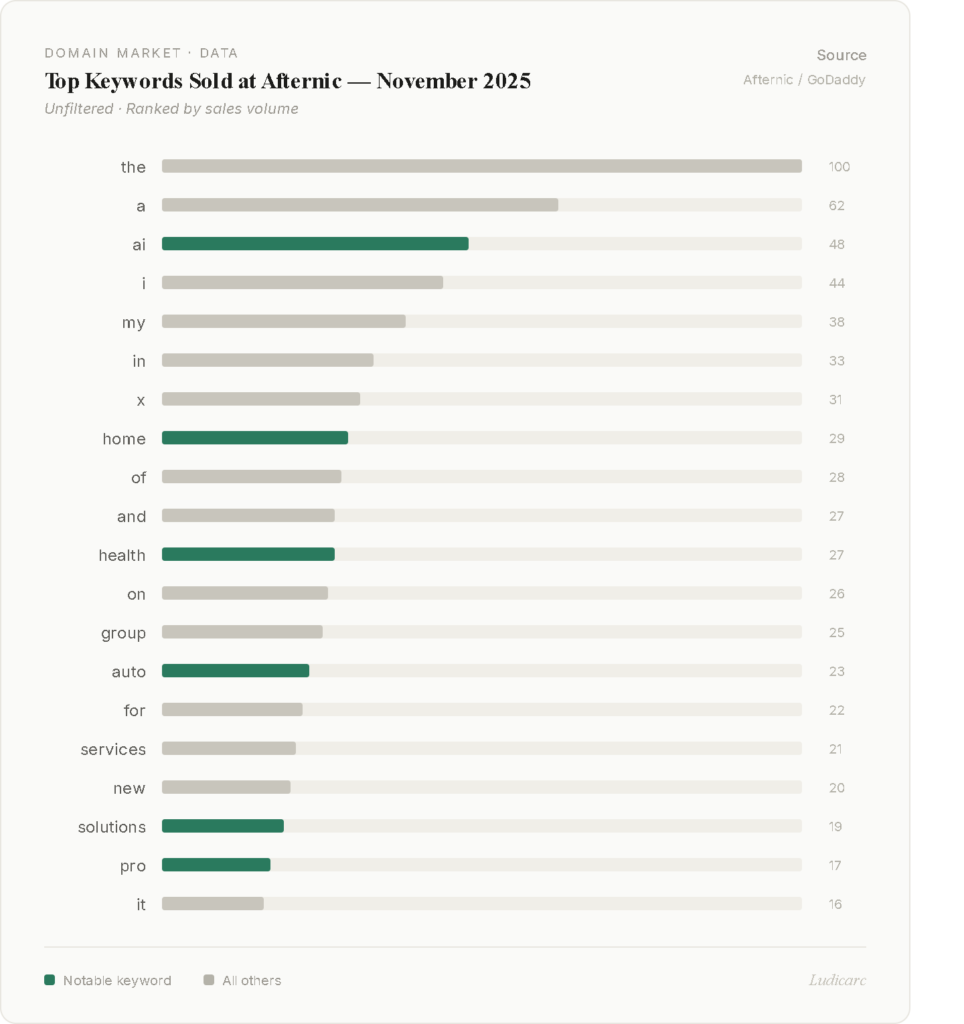
Strip out the filler words — “the,” “a,” “of,” “and” — and the pattern becomes clear immediately. “AI” sits in the top three. “Health,” “home,” “auto,” “pro,” and “solutions” all appear in the top twenty. These aren’t trending search terms. They’re permanent industries with constant, ongoing demand for new domains as new businesses form inside them.
“AI” in particular is worth noting. It’s there not because it’s a common word but because every company building in artificial intelligence wants a domain that signals it instantly. That demand is structural, not cyclical — and it’s not going away.
What makes a domain actually valuable
Short .com domains under 8 characters. Single real dictionary words. High-search-volume keywords in durable industries. Exact-match terms businesses would pay to own outright. Names that work in any context without explanation.
Hyphens and numbers in any position. Anything that sounds like or looks like a trademark. Long-tail phrases. Novelty extensions like .xyz or .lol for investment purposes. Domains built on trends that might not outlast the next two years.
How the resale market works
There are two ways to sell a domain. The first is listing it passively on a marketplace — Afternic, Sedo, or Dan.com — and waiting for an inbound buyer. No active work required, but sales can take months or years. The second is outbound: identifying businesses that would clearly benefit from owning your domain and reaching out directly. More effort, but it closes faster and typically at a higher price.
Pricing is the hardest part. Tools like Estibot give a rough ballpark but are notoriously unreliable for premium names. The real method is comparable sales — what similar domains have actually sold for, which you can research on NameBio. Don’t anchor your price to what you think the domain is worth. Anchor it to what the market has demonstrably paid for equivalents.
The best domain investments look obvious in hindsight. The skill is seeing the pattern before the market does — and holding long enough for it to matter.
What to expect realistically
Most domains you register for $12 will sell for under $200 if they sell at all. The economics of domain investing only work if you buy with discipline, hold a portfolio broad enough to absorb misses, and measure your timeline in years rather than months. The investors who consistently do well approach it exactly like real estate — patient, research-driven, and built on a genuine understanding of what buyers in specific industries need from a domain name.
The ceiling is real though. Single-word .coms in the right category have sold for millions. That tier of digital real estate — Health.com, AI.com, Auto.com — will never be replicated. There’s only one of each, and whoever holds them holds them for as long as the internet exists. That scarcity is precisely what drives the premium, and it’s what makes the domain market unlike almost any other asset class.
Whether you’re buying your first domain for a side project or starting to think about names as long-term holdings, the underlying logic is the same: get in early on something people will always need, own it cleanly, and don’t let it expire.