EV Sales Surge in South America: Chinese Brands Take Over the Market
EV sales in South America doubled to 4% market share in 2024 and hit record highs in 2025 (10.6% in Chile, 9.4% in Brazil), driven by affordable Chinese models like BYD’s Seal and MG’s ZS EV. Tesla has zero presence so far, as tariffs and logistics heavily favor Chinese automakers. This shift could reshape global EV leadership by 2030.
The Boom: From Niche to Mainstream
South America’s EV market is exploding without U.S. or European giants leading the charge. According to the International Energy Agency’s Global EV Outlook 2025, penetration doubled to around 4% in 2024 (including Mexico and Central America), fueled by incentives, cheaper batteries, and a flood of budget-friendly imports.
By September 2025, Chile reached 10.6% EV share for new registrations, Brazil hit 9.4% in August, and Uruguay reached an incredible 28% in Q3 — all record highs reported by local associations.
This isn’t hype; these are real sales. Globally, EVs reached 18% of new car sales in 2025, but South America’s growth is accelerating faster than many expected. While Europe sits at 56% EV share and China leads with 51%, countries in South America are catching up rapidly thanks to subsidies and expanding charging networks.
Chinese Brands Dominate: Why They’re Winning
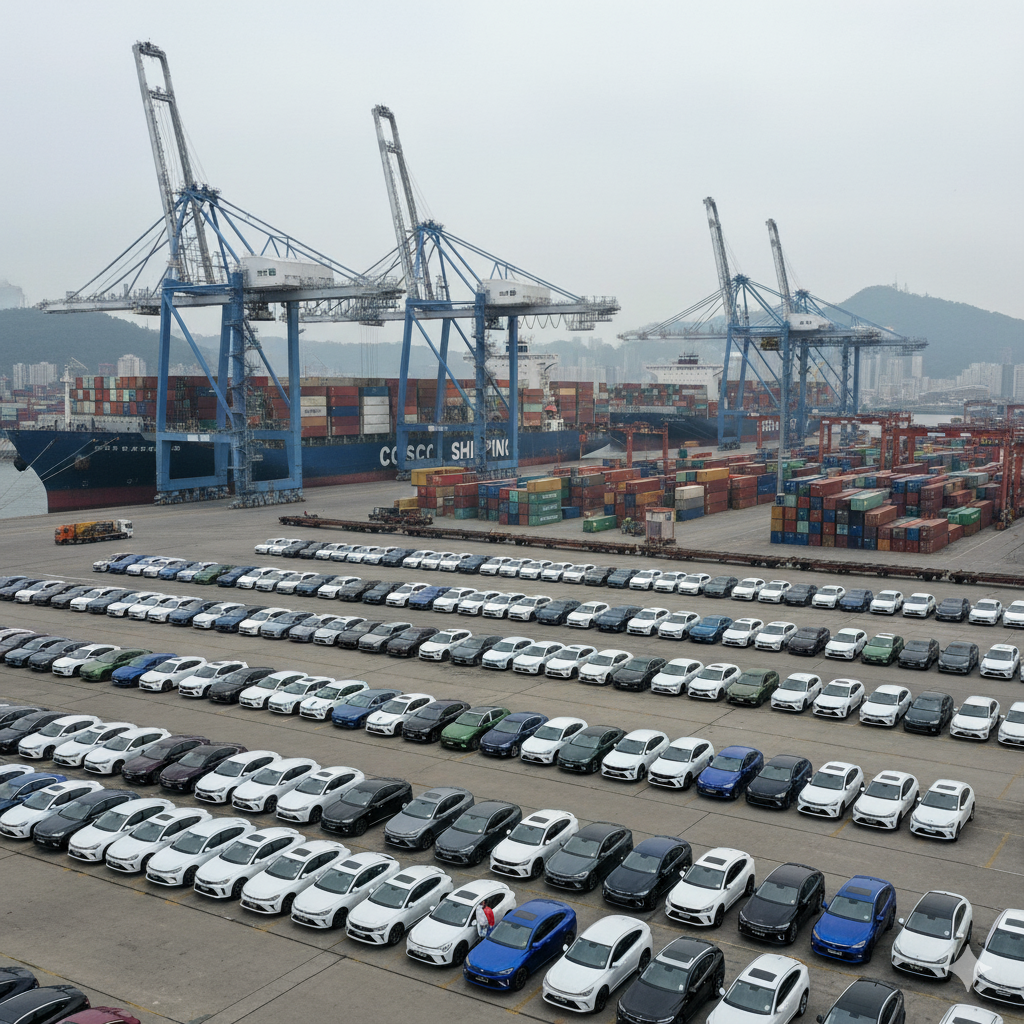
Chinese automakers are overwhelming the EV space. BYD, MG, Chery, and Great Wall are shipping EVs under $25,000 — often half the cost of similar Teslas. At Peru’s new Chancay megaport (opened November 2025), thousands of Chinese EVs wait for inland transport, highlighting China’s massive export push.
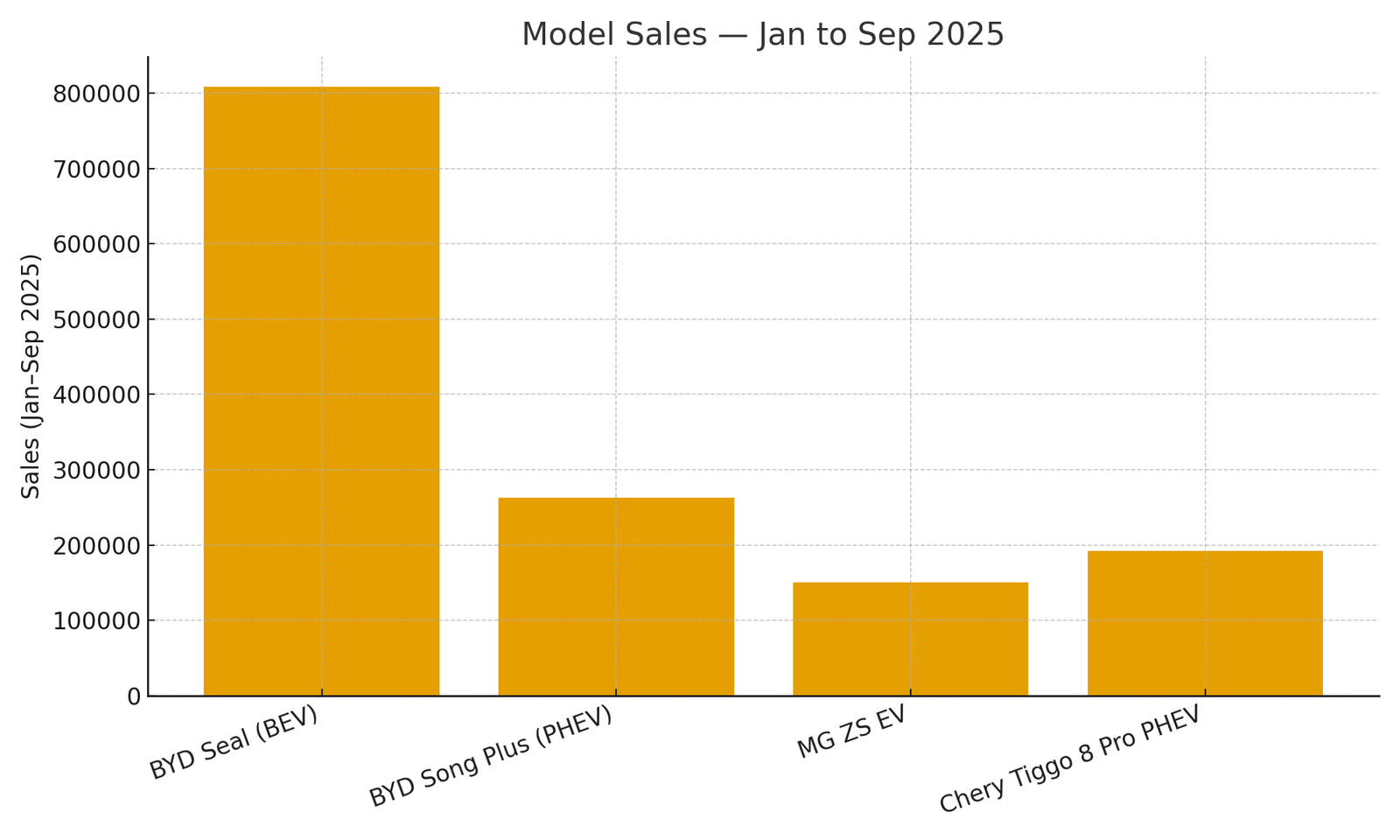
Top Performers in 2025 (Jan–Sep)
• BYD Seal (BEV) – 808,173 sales globally, strong in Brazil and Chile
• BYD Song Plus (PHEV) – 262,445 sales, popular in Uruguay and Argentina
• MG ZS EV – approx. 150,000 regional sales, strong in Brazil and Colombia
• Chery Tiggo 8 Pro PHEV – 192,000 sales, strong presence in Mexico and Peru
BYD alone commands 20–30% of regional EV sales, according to multiple consultancy firms. These models offer 300+ mile ranges, fast charging, and features like ADAS, all at prices locals can afford.
Tesla’s Absence: Logistics, Tariffs, and Strategy
Tesla is still completely missing from South America. The company has no factories, no showrooms, and no service centers south of Mexico, mainly due to high import duties (up to 35% in Brazil) and complicated logistics. A 2025 analysis noted that Tesla’s focus on Europe and Asia left a major gap one that Chinese automakers quickly filled through localized production, like BYD’s Brazil plant opened in 2024, and through partnerships with regional distributors.
U.S. tariffs add another obstacle. A November 1, 2025 executive order imposed 25% duties on heavy-duty trucks and parts, plus 10% on buses from China. This indirectly encouraged regional governments to strengthen their own protectionist measures.
Result: Chinese EVs dominate on affordability and availability, while Tesla plans a 2026 entry via Mexico exports but the market may already be locked in by then.
Broader Impacts: Economy, Environment, and Geopolitics
This shift is significant. South America’s auto industry — long dominated by Volkswagen and Ford — is now seeing rapid Chinese investment. Geely’s Thailand-built EX2 BEV is set for regional entry in 2025, while Brazil recorded THB 70.98 billion in auto investments from January to September, signaling a major pivot toward EVs.
Environmentally, the boom is a clear win: EVs help cut emissions in heavily polluted cities like São Paulo and Santiago. Economically, new assembly plants create jobs, though concerns linger about IP vulnerability and reliance on Chinese supply chains.
Geopolitically, the surge in Chinese EV presence is being framed as a soft-power expansion. Several major reports describe it as a “Trojan horse” strategy reshaping influence in the Americas.
Challenges remain. Charging infrastructure still lags only around 10% coverage compared to Europe’s 50% and recent sales dips in the U.S. illustrate ongoing global volatility and potential slowdowns.
Bottom Line
South America’s EV revolution is being shaped almost entirely by Chinese automakers, with Tesla absent and Western brands slow to react. By 2030, the region could mirror China’s dominance in EV adoption, shifting global trade dynamics.
Great for consumers seeking affordable electric cars more complicated for traditional automakers.
More on Automobiles