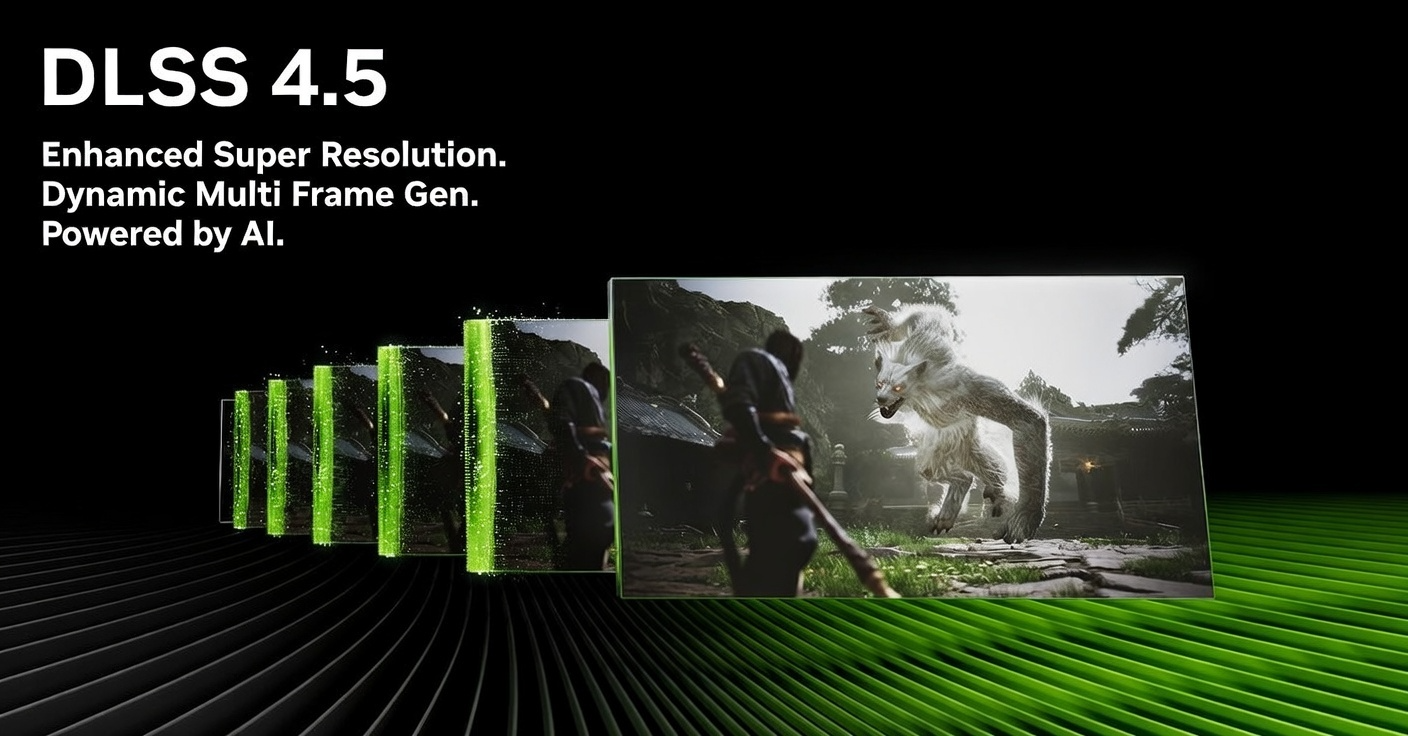
LAS VEGAS, Jan. 5, 2026 — NVIDIA introduced DLSS 4.5 at CES 2026, combining a second-generation Transformer-based Super Resolution model with a new feature called Dynamic Multi Frame Generation, designed to dramatically increase frame rates in demanding games.
The upgrade moves DLSS beyond traditional upscaling. Instead of rendering every frame natively, the system uses AI to generate additional frames in real time, with NVIDIA claiming performance gains of up to 6× in supported scenarios. The company says this enables 240+ FPS at 4K even in path-traced titles previously limited by GPU workloads.
What’s New in DLSS 4.5
2nd-Gen Transformer Super Resolution
A more advanced AI model improves image reconstruction, motion clarity and temporal stability. NVIDIA says it reduces artifacts and sharpens detail compared with earlier DLSS versions. This upgrade is available across RTX GPUs, including 20-, 30-, 40- and 50-series cards via driver updates.
Dynamic Multi Frame Generation (Up to 6×)
The system analyzes scene complexity and inserts AI-generated frames between rendered ones. In heavier scenes, more generated frames are used to stabilize performance, while simpler scenes rely more on native rendering. Full 6× mode is tied to RTX 50-series GPUs, with broader rollout beginning in Spring 2026.
Path Tracing Focus
DLSS 4.5 is optimized for path-traced workloads, allowing higher-end lighting and reflection techniques to run at playable frame rates that previously required major visual compromises.
Early Performance Indicators
Demonstrations shown on RTX 5090-class hardware suggest major uplifts in ray-traced games. Titles such as Cyberpunk 2077, Alan Wake 2, and Black Myth: Wukong were shown moving from sub-70 FPS native performance to well over 200 FPS with DLSS 4.5 enabled. NVIDIA says image quality remains stable, with reduced ghosting versus earlier frame-generation approaches.
Rollout and Support
Super Resolution improvements are available immediately through driver updates. Multi Frame Generation support is expanding, with hundreds of titles already using DLSS technologies and more integrating the new version through 2026. Upcoming releases are expected to adopt DLSS 4.5 at launch, particularly for ray- and path-traced modes.
Industry Impact
DLSS 4.5 reflects a broader shift toward AI-assisted rendering, where GPUs render fewer frames directly and AI reconstructs the rest. NVIDIA positions this as a path to maintaining visual fidelity while scaling performance for high-refresh 4K gaming.
With support spanning multiple RTX generations and full features debuting alongside RTX 50-series hardware, DLSS 4.5 marks one of NVIDIA’s most aggressive pushes yet toward AI-driven graphics pipelines.