
- Market Shift in the Premium Segment
- Purchase Price and Incentive Structures
- Energy Expenditure Profiles
- Maintenance and Mechanical Complexity
- Depreciation as the Dominant Cost Driver
- Multi-Year Cost Outcomes
- Usage Patterns and Ownership Experience
- Infrastructure and Practical Constraints
- Strategic Industry Direction
- Conclusion
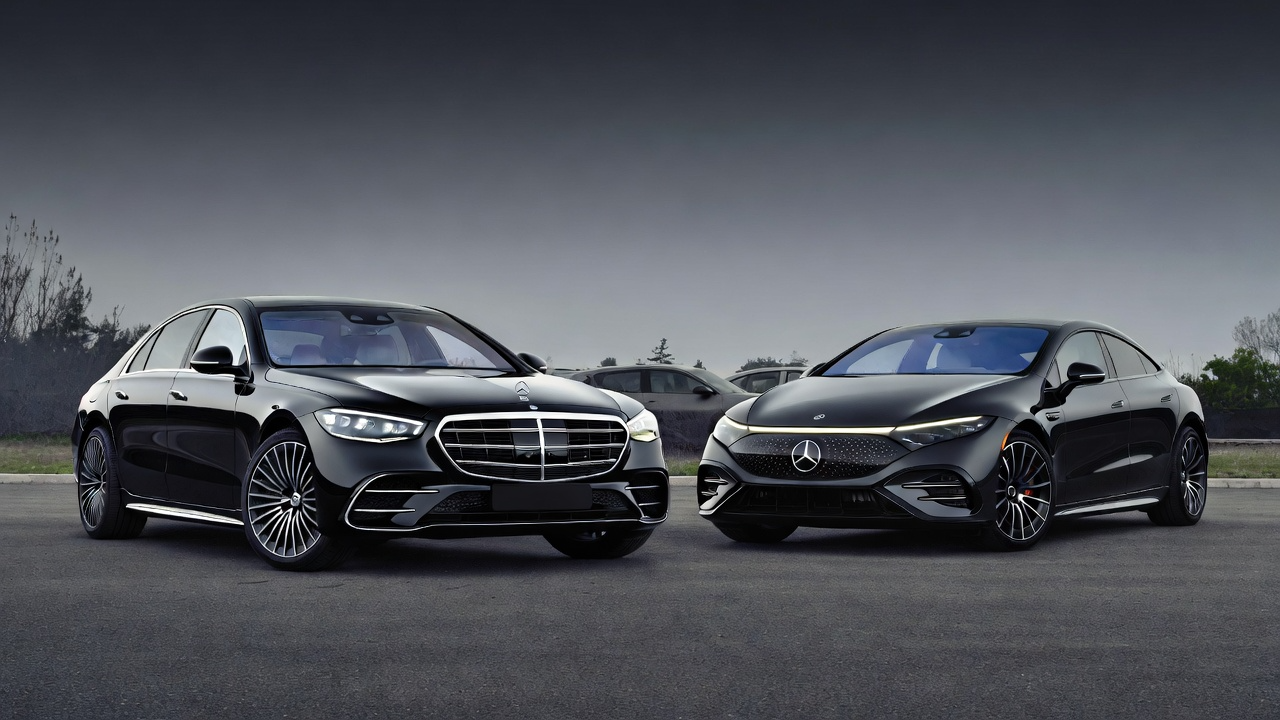
Market Shift in the Premium Segment
Electrification is no longer confined to entry-level efficiency vehicles. It has moved decisively into the upper tiers of the automotive market, where buyers traditionally prioritised performance, refinement, and brand heritage over fuel economy.
Luxury manufacturers are now pursuing parallel strategies. Plug-in hybrid electric vehicles (PHEVs) continue to serve as transitional technologies, combining internal combustion engines with electric propulsion. At the same time, fully battery-electric vehicles (BEVs) are being positioned as the long-term direction of premium mobility.
For buyers, the decision increasingly extends beyond technology preference. Financial considerations — particularly total cost of ownership — have become central to the comparison.
Purchase Price and Incentive Structures
Upfront pricing remains one of the most visible differentiators between powertrain categories, although headline figures often obscure the full picture.
Luxury plug-in hybrids typically carry modest premiums over their combustion-only counterparts. These premiums largely reflect battery integration, electric motors, and associated control systems rather than wholesale platform redesigns.
Battery-electric luxury vehicles, by contrast, historically commanded higher initial prices, driven primarily by large battery packs and new-generation architectures. However, pricing gaps have narrowed as manufacturers scale production and incentive frameworks evolve.
In several markets, tax credits and subsidies materially affect effective purchase costs. Once incentives are applied, price differentials between comparable luxury hybrids and EVs frequently compress to narrower margins than retail pricing alone suggests.
Energy Expenditure Profiles
Operational energy costs represent a more structural divergence.
Plug-in hybrids derive efficiency advantages from partial electric driving capability. In urban or short-distance usage patterns, these vehicles can deliver substantial reductions in gasoline consumption. Yet their economic performance depends heavily on charging behaviour.
When driven primarily without regular charging, PHEVs effectively operate as heavier hybrid vehicles, diminishing their theoretical efficiency benefits.
Battery-electric vehicles, meanwhile, rely entirely on electricity. Across most regions, per-mile energy costs remain lower relative to premium gasoline usage, particularly under home-charging scenarios.
Over multi-year ownership periods, cumulative energy savings frequently favour fully electric vehicles, though regional electricity pricing and charging infrastructure access remain influential variables.
Maintenance and Mechanical Complexity
Maintenance economics highlight another fundamental contrast.
Hybrid vehicles incorporate dual propulsion systems, combining combustion engines, transmissions, cooling circuits, and exhaust systems with electric motors and battery assemblies. While regenerative braking reduces certain wear components, traditional servicing requirements persist.
Battery-electric vehicles eliminate many mechanical subsystems entirely. The absence of combustion-related components typically results in fewer routine service intervals and reduced mechanical failure points.
Industry observations continue to show lower average maintenance expenditures for EV ownership. However, long-term considerations such as battery degradation, replacement costs, and warranty coverage remain relevant in extended ownership scenarios.
Depreciation as the Dominant Cost Driver
Depreciation remains the most consequential financial factor across luxury vehicle categories.
Premium vehicles, irrespective of powertrain, historically experience pronounced value declines driven by rapid model cycles, technology obsolescence, and evolving consumer demand.
Early-generation EVs demonstrated particularly steep depreciation profiles, reflecting uncertainties surrounding battery longevity and technological progression. More recent flagship EV models from established manufacturers have shown signs of stabilisation, though residual value variability remains significant.
Luxury hybrids occupy a more nuanced position. While benefiting from familiarity and flexibility, they also face perceptions of transitional relevance as fully electric adoption accelerates.
In practical terms, depreciation differences between luxury hybrids and EVs frequently outweigh operating cost advantages, compressing total cost gaps over standard ownership horizons.
Multi-Year Cost Outcomes
When evaluated across five-year ownership frameworks, total cost comparisons often yield narrower disparities than initial assumptions suggest.
Lower energy and maintenance costs typically favour EVs, while depreciation dynamics can partially offset these advantages. Hybrid vehicles, despite higher operating expenses, may benefit from residual value behaviour depending on brand, model, and regional demand.
Consequently, total cost outcomes tend to cluster within relatively tight ranges, particularly in premium segments where depreciation dominates expenditure profiles.
Usage Patterns and Ownership Experience
Financial considerations alone rarely capture the full ownership equation.
Plug-in hybrids continue to appeal to buyers prioritizing unrestricted long-distance mobility, minimal charging dependency, and familiar refueling infrastructure.
Battery-electric vehicles increasingly attract buyers seeking reduced operating costs, lower maintenance complexity, and alignment with long-term regulatory and technological trends.
Driving experience also diverges. EVs deliver silent operation and instantaneous torque characteristics, while hybrids provide continuity with conventional driving dynamics.
Infrastructure and Practical Constraints
Charging infrastructure availability remains a defining practical variable.
In regions with mature charging ecosystems and reliable home-charging access, EV ownership economics and convenience profiles strengthen considerably.
Conversely, buyers facing infrastructure limitations may perceive hybrids as offering greater flexibility and lower behavioral adjustments.
As charging networks expand globally, this constraint is gradually diminishing, though disparities persist across markets.
Strategic Industry Direction
Manufacturers continue to invest heavily in both hybrid and fully electric platforms, reflecting transitional realities and long-term objectives.
Regulatory pressures, emissions targets, and technological advancements increasingly favor fully electric development trajectories. Hybrid technologies, while evolving, are widely viewed as intermediate solutions rather than end-state architectures.
This directional shift influences consumer expectations, resale values, and product development cycles.
Conclusion
The cost comparison between luxury hybrids and pure EVs resists simplistic conclusions.
Battery-electric vehicles generally offer advantages in energy efficiency and maintenance expenditure. Hybrid vehicles retain strengths in flexibility and infrastructure independence. Depreciation dynamics remain decisive across both categories.
Ultimately, ownership economics are shaped by driving patterns, charging behaviour, infrastructure access, and model-specific variables rather than powertrain classification alone.
As electrification technologies mature, distinctions in cost structures are likely to continue evolving alongside market adoption trends.